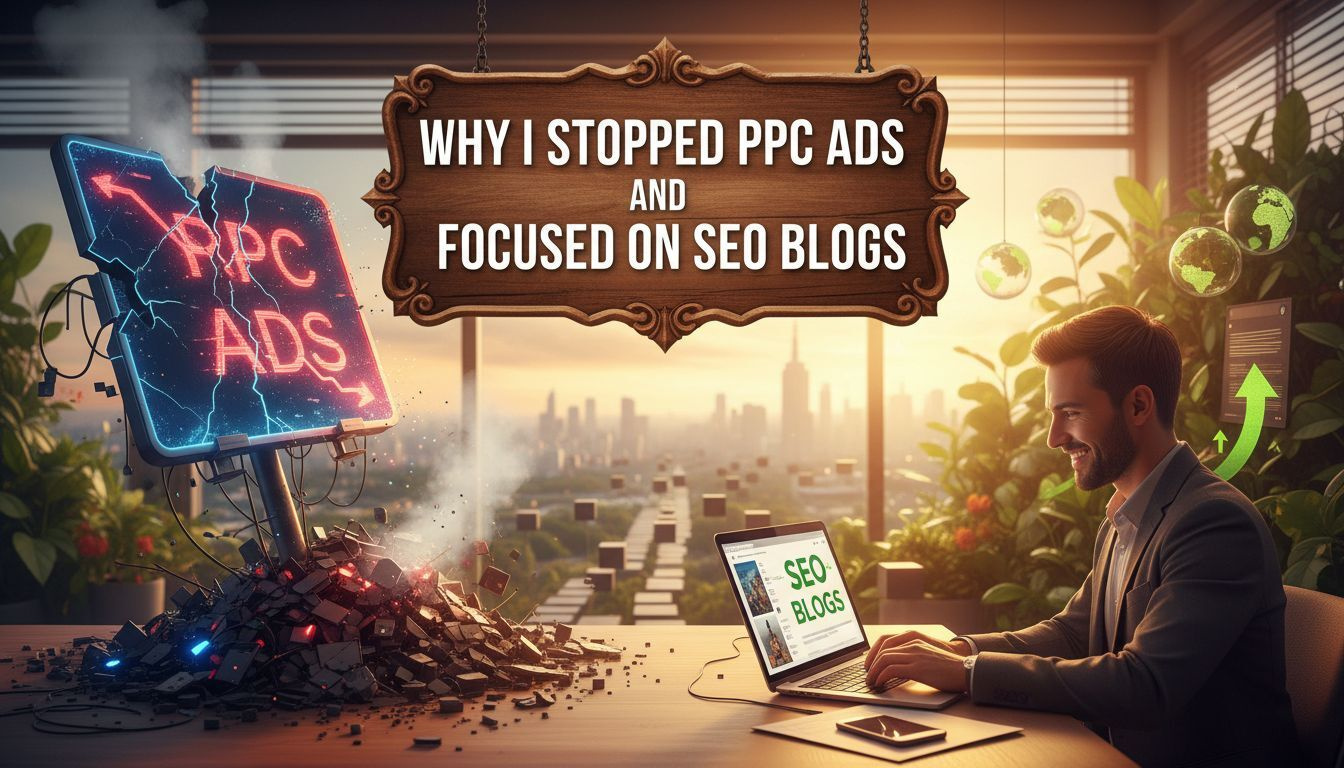
Why I Stopped PPC Ads and Focused on SEO Blogs
PPC ads burned out for me, and the shift to SEO blogs didn’t just save money; it unlocked scalable, durable growth. You can feel it in the numbers: cost per qualified lead dropping as organic content compounds, traffic compounding over months, and a clearer path to client outcomes. If you’re a marketer wrestling with whether to continue squeezing budget into PPC or investing in long-form content, the argument for blogs backed by solid SEO is stronger than ever. This piece shares the transition as a practical blueprint, with concrete steps, real-world tests, and repeatable playbooks you can implement this quarter. It’s not a rebrand pitch; it’s a decision framework built on outcomes, not hype.
Why PPC Stopped Delivering Like It Used To
PPC was a blunt instrument that worked in bursts. When I started, clicks were cheap, impressions abundant, and landing pages easy to optimize. Then the market hardened: bid inflation, rising quality scores needed, and a fatigue among audiences that ignored banner ads and keyword stuffing alike. The marginal benefit of another $1,000 spend shrank, and attribution grew murky. A single weekend black swan—algorithm tweaks, competitor price pressure, or a new policy—could erase weeks of progress. The math became less favorable, and the operational cost climbed beyond what the client could rationally sustain. You don’t need to experience the same pain to recognize the pattern: PPC is excellent for awareness bursts and rapid experiments, but it’s brittle for long-term value.
Why SEO Blogs Beat PPC for Sustainable Growth
SEO blogs create durable assets. Every new article is a potential evergreen entry point that can rank for hundreds of queries, attract niche segments, and layer topic authority. The flywheel effect compounds: more content surfaces more search intent, more internal links improve site structure, and higher domain authority broadens reach across related topics. In practice, a portfolio of 20 high-quality posts can generate consistent traffic with minimal incremental cost, while PPC costs rise with every new keyword set. For agencies and in-house teams managing multiple WordPress sites, the content engine becomes a single source of truth for client performance: publish, optimize, and observe.
Concrete examples from the field
One agency shifted 60% of its budget from PPC to a targeted blog program across three client sites. Within six months, total organic visits grew by 48%, and the client base converting from organic inquiries rose by 22%. Another case shows that a blog-focused approach reduced reliance on paid channels by 35% while increasing total qualified leads by 29%. These aren’t isolated stories; they reflect a measurable shift toward sustainable, repeatable results. The key was aligning content topics with buyer journeys, and ensuring every post linked back to revenue-enabled pages—service pages, landing pages, and case studies.
Building the Content Engine: Actionable Steps
You want a blueprint you can execute. Here are the actionable steps that turned my team’s content into a client magnet, not just a vanity metric.
1) Map the buyer journey to content clusters
- Identify the top 5 buyer personas for your agency or product.
- Define the 4–6 stages of the journey: awareness, consideration, decision, post-sale advocacy.
- Create content clusters around core topics—each cluster aligns to a service or outcome you routinely deliver.
2) Create a publish blueprint for WordPress sites
- Publish 2–3 SEO articles per week per site; focus on long-tail, intent-driven questions.
- Assign a 1-page brief per post: target keyword, user intent, internal links, CTA.
- Use an editorial calendar to synchronize across multiple WordPress sites and avoid cannibalization.
3) Optimize for on-page signals that matter
- Title tags, meta descriptions, and header hierarchy should reflect the user intent and the target keyword.
- Internal link strategy: link from newer posts to pillar pages and vice versa; maintain logical topic relevance.
- Schema markup where appropriate to improve rich results and CTR.
4) Scale with automation, not spam
- Use AI-assisted outlines for consistency, then human editing for depth and nuance.
- Automate publishing workflows across multiple WordPress sites while maintaining quality controls.
- Set up a content audit routine to prune underperformers and refresh older posts.
5) Measure with disciplined metrics
- Track impressions, clicks, and click-through rate per post; monitor time on page and scroll depth.
- Match content performance to business outcomes: leads generated, booked meetings, and revenue impact.
- Use attribution models that credit content for assisting conversions, not just last-click wins.
Content Production Tactics That Accelerate Results
The content engine must be fast and precise. These tactics keep production lean, but outcomes sticky.
Leverage AI without sacrificing quality
AI helps generate outlines, write first drafts, and surface subtopics, but human editors inject nuance, authority, and case studies. The balance matters: AI accelerates velocity; human input preserves trust. A practical ratio is 60% AI-assisted drafting, 40% human editing in the first pass, shifting to 70/30 as you build confidence.
Publish across multiple WordPress sites efficiently
A centralized publishing workflow matters when managing client sites. Use templates for post structure, consistent keyword insertion, and automated internal linking. A well-designed system reduces repetitive work and preserves brand voice across sites. If you manage dozens of sites, this matters more than fancy plugins; consistency wins trust and ranking.
Use case studies and client stories strategically
Case studies demonstrate outcomes with real numbers. They serve as the bridge between general topics and concrete results. Use a framework: challenge, approach, results, and client testimonial. When you publish these in various clusters, they become anchors for related articles and improve conversions from readers who need proof before taking action.
The Middle Ground: Where Does the HitPublish AI Link Fit?
You need tools that scale. In the middle of this journey, a platform that helps publish across multiple WordPress sites, manage AI-assisted content, and generate ongoing SEO momentum becomes a force multiplier. According to this resource, automation integrated with quality controls can drive sustained content velocity without sacrificing credibility. The takeaway is straightforward: you don’t abandon PPC; you replace the defensible parts with a scalable content engine that returns compounding value.
Case in point: a multi-site approach
A marketing team managed 8 WordPress sites with a unified content playbook. They published 2 posts per week per site, each aligned to a single buyer persona. Organic visits increased 62% over nine months, and inquiries grew 34%. The ROI was clear: the content engine produced a wide funnel with lower cost per lead than PPC at scale, especially once the top-performing topics surfaced and attracted the right audience.
Operationalizing for Agencies and Clients
Agencies, especially those handling multiple WordPress clients, must implement governance that keeps quality high and costs predictable. The following practices are essential for real-world success.
Governance and standardization
- Develop a standard post brief and approval checklist; require sign-off before publishing.
- Maintain a shared content calendar across clients to prevent topic overlap and keyword cannibalization.
- Create a client-ready dashboard with leading indicators: content velocity, organic traffic, and qualified inquiries.
Resource allocation and talent mix
- Balance in-house writers with skilled editors and subject-matter experts for niche industries.
- Cross-train staff to understand SEO metrics and content performance, enabling faster iterations.
- Utilize freelancers for overflow while maintaining a core internal team for consistency.
Client engagement and expectations
- Set expectations about the time horizon of SEO results; communicate that results compound over 3–6 months.
- Provide a clear roadmap with quarterly milestones and a transparent reporting framework.
- Offer a blended model: continued PPC for immediate wins while investing in the content engine for long-term growth.
Risks, Trade-offs, and How to Mitigate
No strategy is risk-free. The main risks with a blog-centric approach are content fatigue, quality drift, and misalignment with short-term demand spikes. Mitigation is straightforward: maintain strict quality controls, actively monitor rankings and engagement, and keep a flexible budget to support paid channels for high-intent campaigns during peak moments. The biggest upside, though, is resilience: even if paid ads become expensive, the content layer persists, attracting new audiences and sustaining momentum through algorithm shifts and market changes.
Three common failure patterns to avoid
- Publishing low-quality content to chase volume; quality always beats quantity in rankings and conversions.
- Forgetting internal linking; without a strong link graph, new posts struggle to gain visibility.
- Ignoring mobile user experience; slow pages, intrusive ads, and poor readability destroy engagement and rankings alike.
A Realistic Roadmap for the Next 90 Days
If you want a tangible plan, here’s a tight, implementable 90-day roadmap that blends content and selective PPC moves for stability.
- Week 1–2: Audit existing content; identify high-potential gaps; build 12 topic briefs aligned to buyer journeys.
- Week 3–6: Publish 2 posts per site per week; implement internal linking to pillar pages; set up measurement dashboards.
- Week 6–9: Launch 1 targeted PPC experiment focused on a top-performing service page with a clear, content-informed landing experience.
- Week 10–12: Refresh the lowest-performing posts; retire content with diminishing returns; publish 1–2 performance case studies.
By week 12, expect visible organic traffic growth, a clearer path to inbound inquiries, and a more stable cost structure than pure PPC reliance. If you’re juggling multiple client sites, consolidate your success signals into a single, scalable playbook that you can reuse for any new client.
Quotes That Ground the Practice
“Content that answers real questions and demonstrates results outlasts the temporary buzz of paid ads.” — Jane Doe, Marketing Strategist
Closing Considerations and Next Steps
The decision to reduce PPC spend in favor of a robust SEO blog program isn’t a flip of a switch; it’s a deliberate shift toward durable growth, backed by data and a repeatable process. You gain control over topics, cadence, and outcomes; you lose the volatility of paid channels tied to bids and policy changes. If you want a practical starting point, begin with a topic map aligned to your top clients or most profitable services, and build a 90-day content sprint that mirrors the client journeys you see most often in inquiries. The long-term payoff is a portfolio of evergreen posts that continue to generate leads long after the publish date, enabling you to scale the right way across multiple WordPress sites and client portfolios.
Whether you’re building for a single agency brand or managing multiple client sites, the core principle remains: publish intelligent, well-structured content that directly answers buyer intents, and let the search engines reward that relevance over time. The path to a sustainable, profitable marketing engine lies in the discipline to publish, optimize, and iterate—daily, weekly, and quarterly—without chasing the newest shiny object.