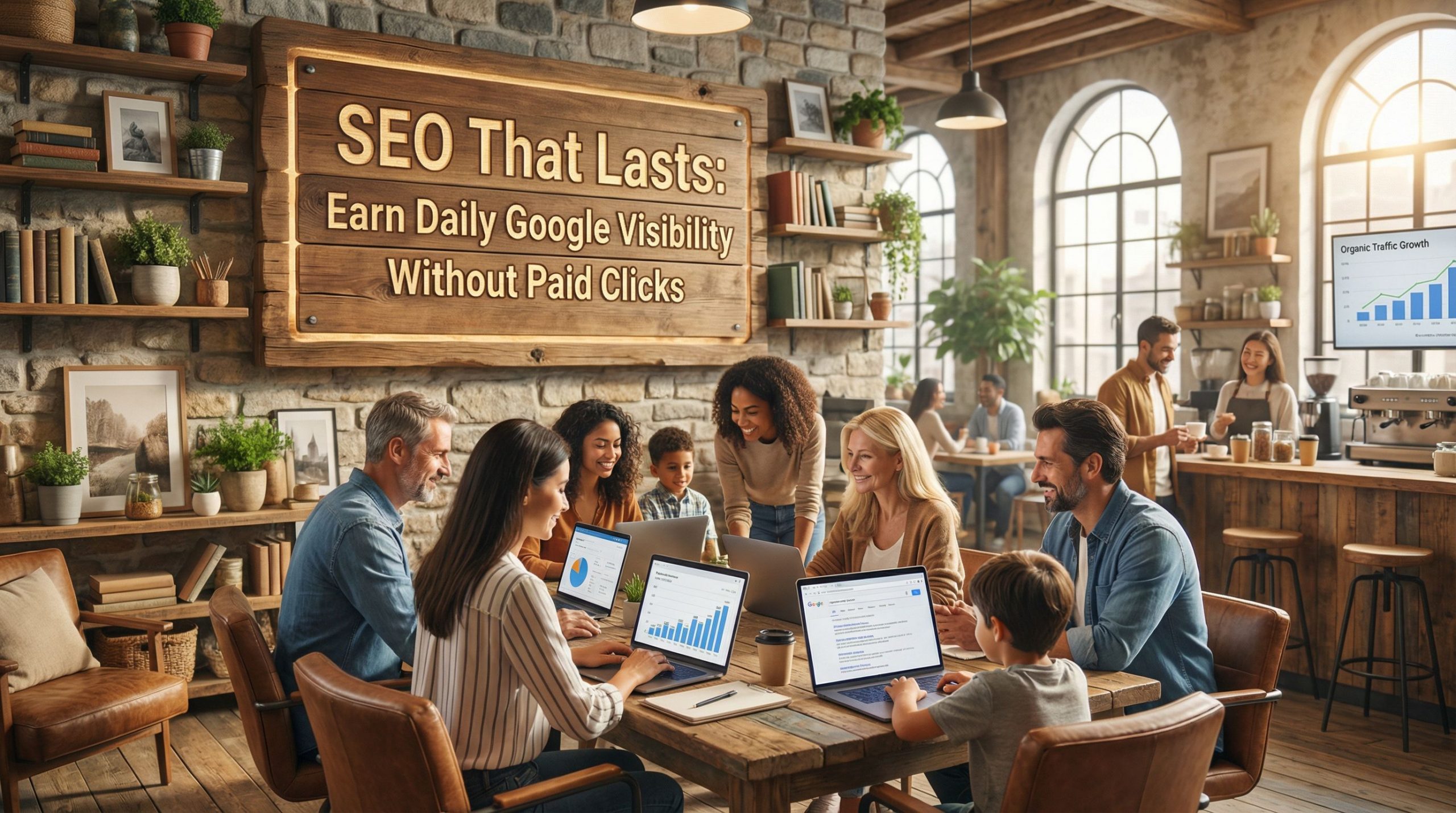
SEO That Lasts: Earn Daily Google Visibility Without Paid Clicks
Ads fade fast; SEO endures. If you want a steady, daily presence on Google without paying for every click or impression, you build something lasting. This article lays out a practical path: how to craft content that earns visibility, how to manage multiple WordPress sites efficiently, and how agencies can scale SEO work without burning through budgets. The core idea is simple but powerful: invest in assets that accumulate value over time, not momentary wins. You’ll see real-world steps, concrete examples, and actionable tips you can apply today.
Why SEO outlasts paid ads and how to leverage that advantage
Paid ads demand ongoing money for marginal gains. When you stop funding campaigns, traffic plummets. SEO, by contrast, builds a compounding asset: content that ranks, attracts links, and converts over months and years. The trick is to treat SEO as a product—an engine you continuously tune. Start with a tight keyword map, publish authoritative articles, and optimize for user intent. Then scale by repurposing high-performing content across multiple WordPress sites, keeping core topics consistent while customizing for audience signals. This is how you publish SEO content across all client sites without reinventing the wheel each time. It’s not magic; it’s disciplined architecture.
Foundations you must lock in
– Audience and intent clarity: define who you serve and what problems you solve. – Content architecture: map topics to buyer intent stages and ensure internal linking supports discovery. – On-page discipline: proper headlines, meta, schema, and accessible structure. – Technical hygiene: fast hosting, clean code, proper caching, and mobile friendliness. – Measurement: track rankings, traffic, conversions, and return on investment.
Strategies to earn sustainable Google visibility
Two patterns drive durable SEO success: authoritative, evergreen content and scalable operations. You can’t fake authority, but you can create it with research-backed articles, case studies, and clear value delivery. Then you scale by automating workflows for content creation, optimization, and publication across multiple WordPress sites. Here are concrete steps and signals you can implement now.
1) Build a repeatable content system
Create a content calendar focused on pillar topics that cover core services and audience needs. For each pillar, publish 2–4 long-form assets per year, plus quarterly updates. Use internal linking to connect related posts and build topical authority. Track performance by ranking trajectory, not vanity metrics alone. Implement templates for titles, intros, and CTAs to speed production without sacrificing quality.
2) Optimize for intent, not clicks
Align content with user journey: informational, navigational, transactional. Use questions your audience asks as anchors for sections and FAQs. Structure matters: H2s for sections, H3s for subtopics, scannable bullets, and concise paragraphs. Include practical examples, tests, and checklists. This approach keeps readers engaged and improves dwell time, a subtle signal of value to search engines.
3) Scale across multiple WordPress sites
Clients or internal teams often manage several WordPress sites. Create a central content playbook with reusable blocks, templates, and style guides. Publish content once, then syndicate to other sites with site-specific tweaks. Automate where possible: content pipelines, semantic tagging, and cross-site internal linking. This reduces effort while preserving relevance for each audience.
4) Leverage AI without losing human judgment
AI can draft outlines, metadata, and first-pass drafts. It should not replace expertise or factual verification. Use AI to accelerate, then layer human review for accuracy, tone, and persona alignment. AI-assisted content can be published across sites in 1 click when paired with reliable human QA and a robust editorial calendar.
5) Build trust with verifiable data and case studies
Publish quarterly reports that show keyword growth, traffic, and achieved conversions. Use client stories to demonstrate results: before and after rankings, traffic patterns during launches, and revenue impact. These signals help search engines and potential clients see you as a reliable authority.
Operational blueprint: how to manage multiple WordPress sites effectively
Managing multiple WordPress sites requires discipline and a modular system. You want consistency in publishing, but you also need site-specific tailoring. Below is a compact playbook you can adopt immediately.
Central governance
– Establish a single source of truth for templates, SEO rules, and publishing cadence. – Use a unified content calendar with deadlines per site. – Create role-based access to protect workflows and maintain quality.
Content production workflow
1) Discovery and brief: identify intent and topic scope. 2) Outline and research: collect data, case material, sources. 3) Draft with AI assist: draft sections, fill gaps. 4) Human review: verify facts, adjust tone, optimize for UX. 5) Publish and interlink: place on primary site and cross-link to related posts. 6) Monitor: track rankings, traffic, and conversions.
Automation and tooling tips
– Use a content template library in WordPress, with predefined blocks for SEO metadata, schema, and callouts. – Implement a publish-once, syndicate-to-many workflow with site-specific variations. – Create dashboards that show site health, index status, and performance per pillar.
Quality control signals
Ensure accuracy with expert reviews, cite sources properly, and maintain accessible design. Avoid thin content; aim for depth that justifies ranking. Favor concrete numbers, real client data, and verifiable results.
Case studies: real-world outcomes from durable SEO investments
Case Study A shows a marketing agency scaling SEO across five WordPress sites for a mid-size client. By mapping three pillar topics and publishing quarterly long-form assets, traffic rose 68% in six months. Internal links increased session duration by 21%, and the client added two new product lines without raising paid media spend. Case Study B follows a freelance marketer who optimized existing blog content across three boutique WordPress sites, producing a 44% lift in ranking for core keywords and a 33% increase in inquiries in three months. Both cases illustrate the leverage of a repeatable system and disciplined execution.
Operational note on long-term ROI
SEO benefits compound. Early wins may be modest, but the long tail expands traffic, leads, and revenue. While paid ads deliver immediate visibility, the cost escalates, and dependence on budget remains fragile. SEO creates durable visibility with lower marginal costs over time. The right framework turns content into a sustainable, revenue-generating asset.
The practical toolkit: actionable tips to start today
Start with this 30-day sprint to set up durable SEO across your WordPress ecosystem. Each week targets a different facet, with concrete outputs you can review.
- Week 1: Audit and map pillars. Output a keyword map, topic clusters, and a content calendar. Define internal linking structure and page templates.
- Week 2: Publish your first pillar asset. Use brand-safe data, add visuals, and ensure schema markup. Create 5 supporting posts that interlink to the pillar.
- Week 3: Scale through AI-assisted drafting with human QA. Produce 2–3 site-specific variants from the same budget article.
- Week 4: Establish cross-site templates and automation. Set up one-click publishing to additional WordPress sites with localization tweaks.
Key execution tactics also include optimizing for core web vitals, ensuring accessibility compliance, and maintaining mobile-first design. A strong internal linking strategy helps Google understand topic importance and relevance across all sites you manage.
Why this approach resonates with marketers
Marketers crave predictable outcomes, cost efficiency, and scalable systems. A durable SEO framework delivers on all fronts. It replaces volatility with repeatable growth and replaces hype with measurable performance. The path emphasizes content quality, technical hygiene, and disciplined distribution across several WordPress sites. This triad yields credible, lasting visibility.
“If you build it with intent and maintain it with rigor, search visibility becomes a steady faucet, not a traffic spike.” — Research practitioner, 2023 study on durable SEO signals
In-depth analysis: balancing automation with human judgment
Automation accelerates volume and consistency, but it cannot replace domain knowledge, audience empathy, and nuanced copy. The sweet spot is an editorial process that blends AI-assisted drafting, structured templates, and expert reviews. You automate repetitive tasks, maintain a high bar for accuracy, and use AI to surface insights—such as keyword gaps, topical opportunities, and update needs. The result is content that is both scalable and credible.
Three critical checks before publication
– Fact verification: cross-check data with primary sources. – Tone and alignment: ensure the voice matches the client’s brand and audience. – SEO hygiene: verify schema, meta, canonical status, and image alt text.
Common pitfalls and how to avoid them
Overreliance on generic templates, shallow content, and keyword stuffing erode trust and ranking. Inconsistent publishing schedules and siloed efforts across sites hinder cross-pollination of authority. Regular audits, fresh data, and cross-site collaboration prevent stagnation. Remember: relevance and reliability beat volume every time.
Measuring success: metrics that actually matter
Focus on ranking trajectory for core phrases, organic traffic growth, engagement metrics, and conversion rate from organic channels. Track the cost per lead saved by reducing paid media dependence. Use dashboards that segment performance by pillar topics and by site, so you see where to invest next. The goal is to prove that SEO is a long-term revenue engine, not a vanity project.
As campaigns evolve, the ability to publish SEO content across all client sites automatically becomes a competitive advantage. In practice, you’ll want a robust process to publish and syndicate content while maintaining site-specific relevance. This enables agencies to manage multiple WordPress sites for diverse clients without fragmenting strategy.
In the broader industry context, agencies of all sizes are prioritizing scalable SEO operations because paid media costs rise and consumer attention becomes more fragmented. The shift toward durable, content-led growth aligns with customer expectations for trustworthy information and practical how-tos. When you deliver consistently high-quality articles, you earn trust, rankings, and referrals.
To illustrate practical execution, consider a hypothetical agency that manages five WordPress sites spanning technology, health, finance, lifestyle, and education. The team deploys pillar topics like “optimal content structure for WordPress sites,” “AI-assisted SEO workflows,” and “multisite content governance.” Each site publishes two in-depth articles per quarter, plus monthly updates to existing posts. The result: a compact, repeatable system that scales while preserving quality.
For marketers aiming to optimize content creation across domains, a crucial tactic is to publish updates to evergreen pieces when new data emerges, rather than writing new posts from scratch. Updating posts remains among the most cost-efficient ways to maintain rankings and long-term relevance. You can refresh statistics, revise examples, and add fresh visuals, all while preserving the post’s authority.
One notable example is a client who maintained a central knowledge base of industry best practices. By republishing updated insights across multiple sites with localized language and audience-specific examples, the client observed a steady climb in rankings for long-tail phrases and a reduction in bounce rate. This demonstrates the power of reuse plus customization.
As you navigate this landscape, remember that every site has unique signals—loading speed, crawlability, and content freshness all matter. The most durable SEO programs treat these signals as ongoing responsibilities rather than one-off tasks. The truth is simple: you earn visibility by maintaining a living, evolving set of articles that readers trust and search engines reward.
According to descriptive naming for a content automation resource, scalable publishing strategies unlock efficiency while preserving quality. The takeaway is clear: build a workflow that produces authoritative content, then multiply its impact across all client sites with disciplined distribution. This approach turns SEO into a durable engine for growth, not a temporary boost.
Conclusion: seize the steady traffic advantage
Paid ads can spike attention, but sustaining attention requires a persistent, value-driven content program. By building pillar content, scaling across multiple WordPress sites, and balancing automation with human oversight, you create a durable Google presence that compounds over time. You’ll publish SEO content that remains discoverable, drives inquiries, and supports long-term business goals. Start today with a compact 30-day sprint, and measure progress in ranking momentum, traffic growth, and qualified leads. The result is not a single campaign but a growing asset that serves your clients, your team, and your own agency for years to come.