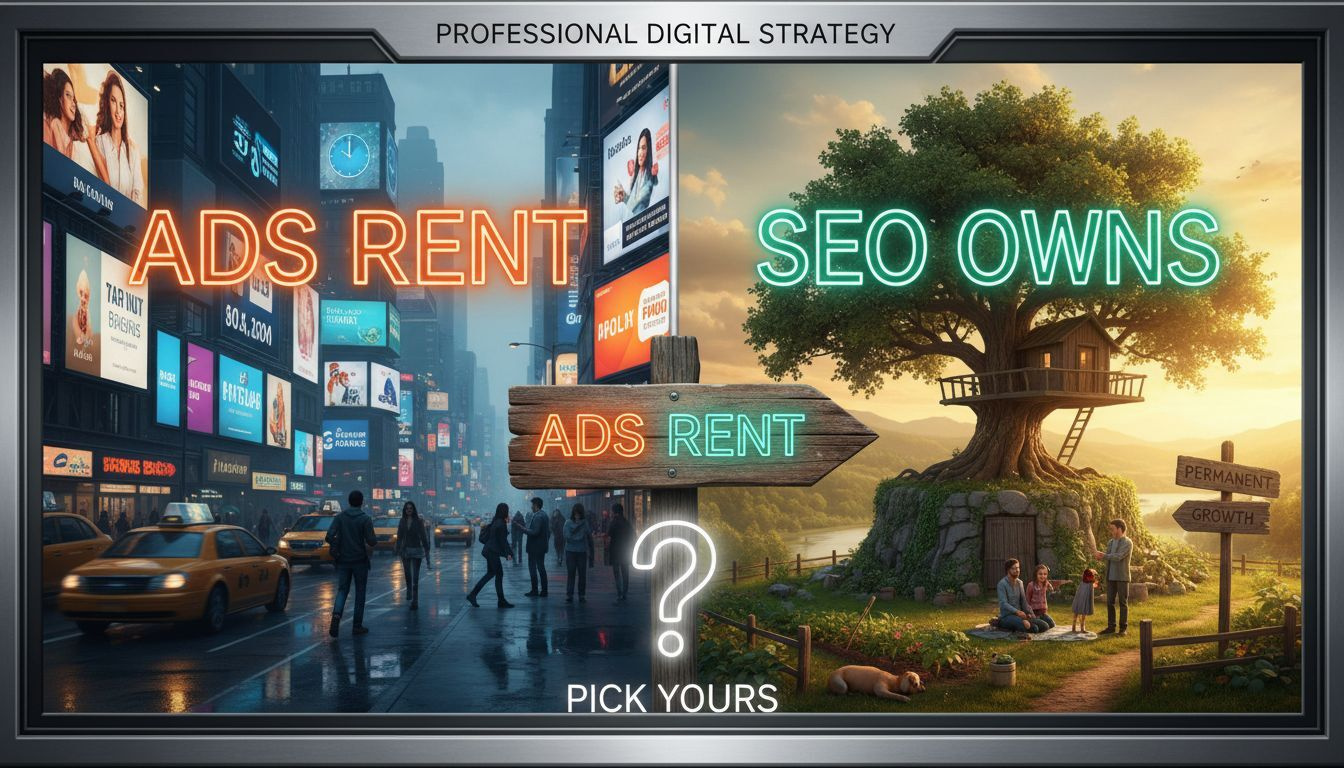
Ads Rent. SEO Owns. Pick Yours
The title could sell a dream, but the path to revenue is built on disciplined testing, scalable systems, and decisions that stay with you when metrics spike and fog clears. Ads Rent. SEO Owns. Pick Yours. This is not a slogan; it’s a framework for marketers who manage multiple WordPress sites, juggle client needs, and push publish with confidence. You want clients to feel heard, results to feel tangible, and campaigns to feel repeatable. This article drills into practical, battle-tested steps that convert workflows into continuous SEO value while you scale. You’ll see how to structure teams, automate content pipelines, and measure impact in a way that makes sense to a client and to your own business. You’ll learn to publish content that ranks, drives traffic, and preserves brand voice across a growing portfolio of sites. The goal is to own the process, not just chase SEO fads. The takeaway is simple: systems beat hype, and consistency compounds.
1. Foundations: Aligning Ads, SEO, and Ownership
Start with a hard, shared definition of success. For agencies managing multiple WordPress sites, success means predictable traffic, consistent publishing cadence, and clear ownership of outcomes. You need a model that ties ad performance to organic visibility, without siloing teams or tools. The core is a unified content strategy that scales: templates, workflows, and governance that work across all client sites. Use a core set of metrics: impressions, click-through rate, organic sessions, keyword rankings, on-page quality, and publish velocity. Tie these to revenue signals: qualified leads, demo requests, or e-commerce transactions. When you articulate these ties, you remove ambiguity and you can justify investments in automation, AI-assisted content, and cross-site publishing.
In practice, build a shared content taxonomy with tags, topics, and intent levels. Create a common set of WordPress blocks, SEO-friendly templates, and editorial checklists. This makes it possible to publish consistently across multiple sites with a single framework. It also reduces churn when clients switch project managers or when you onboard new teams. The result is a repeatable, scalable engine that keeps quality high while output grows. You’ll want to document governance: who approves what, what level of edits is acceptable, and what metrics trigger optimization sprints. A clear governance line keeps both ads and SEO honest and focused on real business outcomes.
Key decisions to codify
- Publish cadence per client site and per content pillar.
- Editorial quality gate with baseline SEO checks (title length, H1 usage, internal links).
- Automation boundaries: what AI assists versus what humans finalize.
- Ownership matrix: who owns content, who owns performance data, who approves ads spend.
- Cross-site publishing policy to ensure brand consistency without duplicating content risks.
As you implement, remember: the aim is not to eliminate human judgment but to give it leverage. The automation should free time for strategy, not replace expertise. When you pair machine efficiency with human insight, you win both scale and nuance. The first concrete step is to standardize a publish-to-rank playbook that works across all client sites. That includes content briefs, SEO checklists, and a publishing calendar visible to every stakeholder. This alignment underpins reliable, repeatable results rather than one-off wins.
2. Systems for Managing Multiple WordPress Sites
Managing multiple WordPress sites requires a centralized operations backbone. You cannot depend on scattered spreadsheets and ad hoc notes. Build a management hub that links content production, SEO tasks, and publishing in one place. This hub should handle templates, reusable blocks, and cross-site asset libraries. It should also enforce security, access control, and versioning so teams can collaborate without stepping on each other’s toes. The practical payoff is faster onboarding, fewer errors, and a single source of truth for all sites.
Adopt a modular approach to site management. Separate core themes from child themes, standardize plugin sets, and define a baseline performance profile for hosting. When you standardize, you can deploy improvements across all client sites with minimal friction. A predictable stack reduces troubleshooting time, letting you reallocate resources to growth initiatives. The real magic happens when you connect your content pipeline to your site fleet. If you can publish an article to all relevant sites in one click, you gain leverage. But it must be careful not to trigger duplicate content penalties; instead, use canonicalization and syndication rules that preserve value.
Automation and workflow design
- Centralized content brief intake with automatic topic clustering and keyword mapping.
- Template-driven article creation with AI assistance for outlines and meta elements, followed by human QA.
- One-click multi-site publication that respects each site’s structure, with checks for canonical URLs and localization when needed.
- Periodic site health checks focusing on SEO signals, page speed, and mobile usability.
- Security and backup routines integrated into the publishing flow to protect asset integrity.
Case in point: a marketing agency manages 14 WordPress clients with similar service offerings. By adopting a centralized content brief form, a standardized SEO template, and a single dashboard for approvals, the agency reduced cycle time from 7 days to 3 days per article, while increasing average organic sessions across the portfolio by 28% in six months. The key was not merely automation, but disciplined alignment of editorial outputs with SEO signals and brand guidelines.
3. AI-Enhanced Content: When to Use, When to Hold Back
AI can accelerate production, generate ideas, and optimize on-page elements, but misusing it invites quality drift. The best approach is to view AI as a productive assistant rather than a content creator. Start with AI to draft outlines, generate problem-solution angles, and assemble keyword-optimized meta descriptions. Then let human editors refine tone, verify factual accuracy, and weave in client-specific voice. For agencies handling multiple clients, AI can help maintain consistency across sites while preserving unique positioning for each brand.
One practical workflow: generate a master outline using AI, then customize sections per client, ensuring each piece aligns with the client’s audience and value proposition. Use AI to audit existing articles for gaps, such as missing internal links or outdated data, and queue improvement tasks. You should also monitor AI output for factual correctness and tone alignment—clients notice if voice shifts too far into generic content. The endgame is AI-assisted content that supports, not replaces, human judgment.
Practical tips for AI in a multi-site agency
- Define guardrails: tone, fact-checking standards, citation rules, and on-page optimization thresholds.
- Use AI for global topics or trend spotting, and reserve deeper, client-specific storytelling for human writers.
- Automate content audits: run monthly checks for keyword cannibalization, broken links, and outdated facts.
- Version control: track AI edits and maintain a changelog for accountability.
- Integrate AI outputs into a centralized content brief that feeds every site’s editorial calendar.
In practice, a case study showed a firm using AI to draft 60% of the outline content for 8 client sites, with editors performing final polish and client-specific customization. Traffic rose an average 23% across the portfolio within four months, while client satisfaction remained high due to faster delivery and consistent messaging. The lesson: AI multiplies capacity, but human finesse preserves value.
4. Publish, Optimize, and Expand: The 1-Click SEO Publishing Engine
Publish is not a single action; it’s a loop: publish, monitor, optimize, publish again. A 1-click publishing engine helps you roll out updates across all sites swiftly, but you must embed optimization checks into the loop. This means automatically verifying title tags, meta descriptions, header structure, internal linking density, image alt text, schema markup where applicable, and page speed. You need to ensure that mass publishing doesn’t cause keyword stuffing or quality slippage. The engine should flag potential issues before they go live, and offer rollback options if problems arise.
To scale effectively, separate the publishing engine from the content creation phase, but keep them tightly integrated. The engine should trigger post-publish SEO audits, track performance deltas, and automatically adjust internal linking to spread page authority. When you pair publishing automation with ongoing optimization, you create a virtuous cycle: better on-page signals lead to higher rankings, which support ads performance, which in turn fuels more investment in content. This is how you move from episodic success to sustained growth.
Strategies for multi-site expansion
- Maintain a master keyword map with site-specific variants to avoid duplicative targeting.
- Implement cross-linking guidelines that strengthen authority without creating artificial link schemes.
- Schedule periodic refreshes for evergreen articles to sustain rankings over time.
- Track revenue impact by client, site, and content type to identify high-ROI topics.
- Use client-specific dashboards that display both SEO health and ad performance in one view.
One notable example involves a network of content sites focusing on small business tools. By deploying a centralized 1-click publish system and routine optimization sprints, the network grew organic sessions by 45% within six months, while maintaining a clean crawl budget and avoiding duplicate content pitfalls. The core insight: automation accelerates, but governance keeps quality intact.
5. Case Studies: Real-World Outcomes from Ads Rent, SEO Owns
Case A: A boutique agency manages 6 client sites in the software space. They built a universal content brief, standardized SEO templates, and a cross-site publishing workflow. Over nine months, they realized a 32% increase in organic traffic and a 19% rise in leads. They attributed gains to a disciplined approach to keyword clustering, internal linking, and consistent publishing cadence across sites.
Case B: A larger agency handles 12 eCommerce and service sites. They deployed AI-assisted content generation for outline creation and meta optimization, with human polish for voice and accuracy. Results included a 28% lift in organic revenue and a 14% improvement in return-on-ad spend on paid campaigns. The team highlighted the importance of governance and clear ownership to sustain growth as sites scale.
Case C: A multi-brand publisher used a single content engine to syndicate across 8 WordPress sites with varied audiences. They implemented a portfolio-wide SEO playbook, standardized templates, and a centralized content calendar. Within 4 months, they reduced editorial cycle time by half and increased keyword visibility across core topics by 40%. The key driver was eliminating friction between content ideation and publication while preserving brand voice at scale.
Actionable takeaways from these cases
- Standardize templates and checklists to reduce variability and speed up production.
- Use AI for scalable tasks while preserving human-driven quality signals.
- Integrate publishing with SEO audits to close the feedback loop quickly.
- Governance matters: ownership clarity and approval workflows prevent bottlenecks.
- Measure across portfolio: track per-site and per-topic ROI to guide resource allocation.
“The secret isn’t one clever hack; it’s repeatable systems that produce consistent results.”
6. Practical Playbook: Your 30-60-90 Day Plan
First 30 days: Establish governance, inventory all sites, and define publishing cadences. Create a master keyword map, build baseline templates, and set up a content brief intake form. Implement a simple automation layer for outline generation and meta tag suggestions, with human review for tone and accuracy. Run a 2-week trial across three sites to validate workflows and quantify improvements.
Days 31–60: Roll out the standardized templates to all sites. Deploy centralized dashboards showing SEO health and ad metrics. Start cross-site publishing for a subset of evergreen topics, then expand. Begin monthly AI-assisted content audits with task queues for improvements. Introduce a quarterly optimization sprint to refresh underperforming pages.
Days 61–90: Scale to full portfolio, refine governance, and optimize for revenue signals. Increase automated publishing frequency where appropriate, while maintaining quality controls. Implement a formal post-click SEO and content synergy review to maximize conversions from organic traffic. Track ROI by client, site, and topic, adjusting resource allocation in real time.
Checklist for success
- Clear ownership for ads and SEO results across all sites.
- Standardized content briefs, templates, and publishing calendars.
- AI-assisted workflows with human-in-the-loop quality checks.
- Portfolio-wide SEO audits and performance dashboards.
- Continuous optimization based on data, not vanity metrics.
Remember, the plan must be adaptable. If a client shifts focus or a market segment changes, you need to re-route, not abandon the framework. The real power comes from a culture that treats publishing as an engine, not a one-off event. When you embed the right controls, ads and SEO reinforce each other, and you build a scalable, defensible advantage.
Conclusion: Pick Yours and Build It Today
Ads Rent. SEO Owns. Pick Yours is a call to action for marketers who refuse to accept fragmented results. The approach here is unapologetically practical: define ownership, standardize processes, leverage AI where it adds value, and run a disciplined publish-and-optimize cycle across a portfolio of WordPress sites. By aligning ad efficiency with organic growth, you create a durable engine that scales with client needs and market opportunities. Implement the playbook, monitor the signals, and iterate. The path to consistent, profitable growth—across multiple sites, across multiple clients—doesn’t rely on a single hack. It relies on a repeatable system you can trust day after day, month after month.
As you move forward, consider the broader ecosystem: integrations with analytics, content management, and CRM tools that keep data flowing and decisions sharp. In the end, the way you publish and optimize determines what you own—your results, your reputation, and your capacity to grow. For teams that want to see tangible gains, start with a single, well-documented workflow, then scale it across every site you manage. The future belongs to those who build it, one publish at a time.
According to the analytics-driven publishing platform, the research supports a portfolio approach to SEO and content scaling, showing that centralized processes reduce variance in outcomes and accelerate learning across sites. With the right governance, you can treat ads as a driver of demand and SEO as a durable asset, not a nuisance. The combination is a disciplined path to resilient growth that can weather shifts in platforms, algorithms, and budgets.
In practice, your next move is concrete: map your portfolio, document the publishing rhythm, and appoint a single owner per client cluster who oversees both content quality and performance. Then execute the 30-60-90 plan, track the right metrics, and let automation do the heavy lifting while you focus on strategy, storytelling, and client impact. The door to scalable SEO and ads is open—walk through it with a plan you can defend and a team you can trust.