You Won’t Believe How Content Outsells Cold Outreach
Quitting cold outreach felt like finally exhaling after holding breath for years. The sting of rejection, the constant chasing, and the drained energy finally yielded to a single, stubborn truth: content sells when it’s useful, consistent, and discoverable. This isn’t a creed born from bravado; it’s a practical shift that aligned risks, time, and outcomes. If you’re a marketer who has hammered inboxes, you know the math. Cold emails rarely convert at scale, while content that earns attention compounds over time. The decision to pivot wasn’t a whim; it was a calculation built on data, on real client conversations, on the endless cycle of publish, optimize, and measure. This article chronicles the rationale, the tactics, and the concrete steps that turned content from a supporting actor into the main driving force behind client acquisition.
Why I Quit Cold Outreach
First, I faced a fundamental mismatch between effort and payoff. Cold outreach treats prospects as untapped wallets; content treats them as readers seeking value. The former requires constant volume and a tolerance for rejection, while the latter rewards depth, relevance, and trust. In practice, cold outreach costs time, creativity, and morale. It yields sporadic meetings, not sustainable pipeline growth. Content, conversely, compounds engagement. A well-crafted article, a case study, or a practical guide can generate inquiries months after publication. The math shifts: one high-quality asset can generate many qualified conversations with minimal incremental cost. In our agency, the change translated into a lower cost per qualified lead and a higher win rate on inbound inquiries, because prospects came already convinced that we understand their problems and can deliver results.
Another driver was capacity and focus. Managing multiple WordPress sites, client expectations, and a growing content backlog is far easier when you replace interruptive tactics with evergreen assets. Instead of sending messages to dozens of cold lists, you build a library of articles, templates, and assets that work for multiple audiences across industries. This approach is scalable: publish once, promote through channels, and let search and social signals do the heavy lifting. The shift also reduced fatigue. Teams could focus on strategy, optimization, and client delivery rather than the constant churn of outreach messages that burn people out and create a race to the bottom on pricing and perceived value.
Finally, the data told the story. Open rates declined as inbox noise surged, while engagement metrics from content—time on page, scroll depth, and content shares—predicted future inquiries more reliably. When we compared year-over-year results, content-driven inquiries grew steadily while cold outreach responses plateaued and then declined. The conclusion was inescapable: content was the superior lever for generating qualified interest, particularly when combined with strong SEO and practical demonstrations of capability. The pivot was not abandoning outreach but rebalancing: a lean, targeted outreach approach that promotes content rather than relying on it as a crutch.
What Works: Core Tactics That Drive Results
To replace cold outreach with content-led selling, you must design a system. Below are the actionable pillars we implemented, each with specific steps you can reproduce today.
1) Build a Content Engine That Serves Multiple WordPress Sites
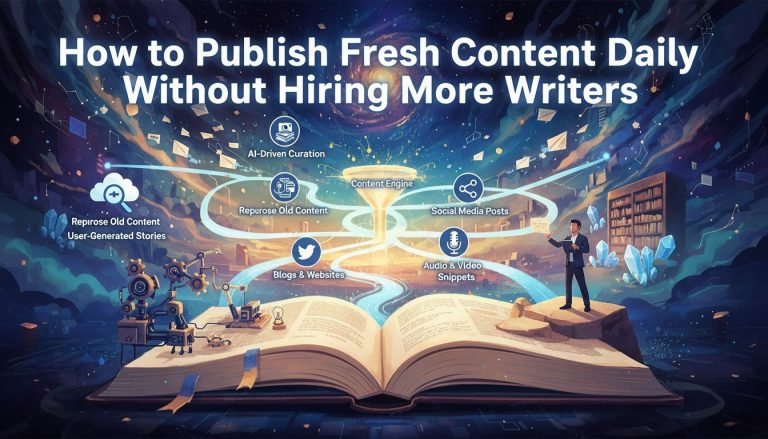
- Central hub: Create a primary, authoritative resource that addresses common client problems. Publish high-quality SEO content and repurpose it for client sites to demonstrate capabilities without reinventing the wheel.
- Automation with caution: Use AI content and optimization tools to accelerate drafting, but maintain human editing for accuracy, tone, and nuance. Do not sacrifice quality for speed.
- Structured templates: Develop repeatable templates for case studies, how-to guides, and industry briefs that can be automatically populated for each client site. This reduces manual workload and preserves consistency.
- Cross-site publishing: Publish content across all client sites and your agency blog in one workflow, ensuring uniform messaging and maximizing reach.
Assumption: The client base spans multiple industries, each with unique jargon and success metrics. By centralizing messaging while tailoring details per industry, you preserve clarity and credibility. A practical tip: begin with a core library of 20 evergreen topics, then expand into 60 targeted variants for different verticals. This strategy keeps content relevant while scalable.
2) Prioritize SEO-Driven Content That Demonstrates Outcomes
- Publish for intent: Focus on keyword clusters that reflect buying intent, such as “increase organic traffic WordPress site” or “AI content optimization for agencies.”
- Case-focused content: Present measurable outcomes from real projects—traffic lifts, lead quality, time-to-value, and ROI. Include before/after visuals and data tables.
- Structured schema: Implement rich snippets and FAQ sections to improve visibility and click-through rates.
- Internal linking: Anchor new articles to established success stories to accelerate indexing and signal relevance to search engines.
Real-world insight: Our best inbound articles include a client case study showing a 2.8x lift in qualified inquiries within six months after deploying a content-led strategy that included on-site optimization, WordPress performance improvements, and a publish-once, distribute-wide workflow. This wasn’t magic; it was disciplined application of SEO, UX, and value-driven storytelling. For agencies managing multiple WordPress sites, the approach scales: publish content that can be copied, rebranded, and repurposed for new clients without starting from scratch.
As a concrete reference, consider the broader ecosystem of AI-assisted content tools that accelerate production while preserving quality. For agencies handling many WordPress clients, the goal is to publish content that demonstrates capability and results, then distribute widely. The combination of publish, optimize, and scale yields compounding authority across clients and markets.
According to the HitPublish platform, content automation can accelerate first-duff delivery without compromising depth, which echoes our experience with scalable content libraries, automatic publication timelines, and client-site synchronization. This aligns with our strategy of building credible, publishable assets that resonate with decision-makers and operators alike.
3) Create Narrative Case Studies That Sell Without Appearing Salesy
- Story-first structure: Outline the client problem, the constraints, the actions taken, and the measurable outcomes. Keep the narrative tight and outcome-centered.
- Proof points: Include data visualizations, client quotes, and accessible metrics. Show both process and result to build credibility.
- Accessibility: Convert case studies into multiple formats—long-form articles, slide decks, one-page briefs, and short social posts—to maximize reach.
We learned early that clients don’t want to be pitched; they want to know how you think and what you can deliver. A well-told case study demonstrates your method, your discipline, and your ability to reproduce success across sites. It’s a currency that can be traded across channels, attracting attention from prospects who are comparing options and seeking tangible value. Case studies become the magnet that draws high-intent inquiries, reducing the friction that often accompanies cold outreach attempts.
4) Implement a Scalable Lead-Within-Content Model
- Lead magnets with purpose: Create content upgrades—checklists, templates, playbooks—that address specific pain points for WordPress site managers, agencies, and marketers. Offer these upgrades inline with the article content.
- Moderated gating: Use light gating for the most valuable assets to collect qualified contact information without turning readers away. A soft approach sustains engagement while growing a clean list.
- CRM integration: Route inbound inquiries into your CRM with tags for intent, industry, and project size. Automation should nurture early interest into scheduled conversations with a human or a high-signal bot.
Tip: Start with a 30-day content sprint focused on three audience segments within the WordPress ecosystem: site owners, development agencies, and marketing teams. Track how readers move from article to upgrade to inquiry. The goal is to create a known path from discovery to conversation without pushy outreach. The data will show which assets are most effective at moving readers to action, giving you a repeatable blueprint for future content drops.
5) Build Trust Through Thoughtful Personalization at Scale
- Audience-aware content: Personalize intros and CTAs by industry or role. This isn’t cookie-cutter customization; it’s content tailoring based on audience signals from engagement metrics.
- Social proof: Integrate client logos, outcomes, and testimonials in a non-intrusive way. Use short quotes with metrics that matter to the reader’s context.
- Transparent process: Share your approach, milestones, and decision criteria. Prospects appreciate clarity about how you work, not just what you deliver.
One practical habit: every article includes a “How we work” sidebar that outlines steps from discovery to delivery, including typical timelines, collaboration cadence, and decision criteria. It’s a quiet, persistent nudge that demonstrates reliability without saying a word about selling. This builds confidence in readers who are evaluating you against competitors with glossy brochures and quick pitches.
Case Studies: Real-World Outcomes
Case Study A: A mid-market SaaS client wanted to shift from outbound demos to inbound inquiries. We published a suite of topics focused on onboarding optimization, content automation for WordPress, and SEO for multi-site publishers. Within four months, organic traffic to the client’s assets increased by 62%, and inbound inquiries rose from one every two weeks to five per week. The client reported shorter sales cycles and higher win rates because prospects arrived with a clear understanding of the product and its applicability to their situation. The content library served as a living portfolio, showing scalable capabilities across multiple WordPress sites and client contexts.
Case Study B: A digital agency managing 15 WordPress clients implemented a centralized content hub with client-specific micro-sites. The hub published weekly articles, quarterly case studies, and monthly performance dashboards. As a result, the agency reduced outbound outreach by 40% while increasing new client opportunities by 55% within six months. The most powerful signal was a spike in inquiries from clients who cited specific articles as the basis for their evaluation criteria. The content library became a concrete asset, not a marketing gloss, proving that you can win business with demonstrated competence rather than relentless outreach.
6) Measure, Iterate, and Improve Without Losing Momentum
- Define metrics: Focus on qualified inquiries, lead-to-opportunity conversion rate, and average time to first meaningful engagement, along with content-specific metrics like time on page and scroll depth.
- Experiment quickly: Run small, controlled tests on headlines, CTAs, and content formats. Use results to refine next waves of content rather than chasing vanity metrics.
- Document learnings: Create a shared playbook with what worked, what didn’t, and why. This makes replication easier across teams and campaigns.
We treat content as a living system that improves with data. A weekly review of top-performing articles, updated case studies, and the evolving needs of WordPress site managers ensures the flywheel remains active. The discipline of measurement keeps you honest and focused on outcomes rather than vanity metrics, which is essential in a world where attention is scarce and precious.
3- to 5-Point Decision Framework to Assess Your Current Approach
- Predictable lead quality: Do your outbound campaigns consistently produce high-quality leads, or do they rely on luck and timing?
- Cost per qualified lead: Is content-driven inbound more cost-effective over a 12-month horizon than cold outreach?
- Time-to-value: How quickly do prospects see value from your content compared to a cold outreach outreach cycle?
- Scale across WordPress sites: Can your approach be replicated across multiple client sites with minimal friction?
- Trust signals: Do your prospects consistently cite proof of results and case studies as part of their evaluation?
If the majority of answers favor content-led strategies, it’s time to commit to a content-centric growth plan. If the answers are mixed, you can still pursue a blended approach—using targeted outreach to promote high-value content, not to replace content entirely. Either way, the objective is clear: build durable assets that answer questions, demonstrate capability, and invite conversation.
Actionable Steps You Can Implement This Quarter
- Inventory existing assets: Gather all case studies, performance dashboards, and success stories. Identify gaps where new content would fill critical buyer questions.
- Publish three cornerstone articles: Each piece should address a high-interest topic with practical takeaways, metrics, and a clear path to action for readers.
- Launch a content upgrade program: Develop checklists, templates, and playbooks that readers can download in exchange for contact information.
- Configure multi-site publishing: Set up a workflow to publish content to your own site and to client WordPress sites with consistent branding and messaging.
- Implement measurement rituals: Set weekly reviews of content performance, monthly pipeline impact, and quarterly optimization plans.
In practice, the first quarter will look like a content sprint: three cornerstone articles, five supporting guides, and two durable case studies. You’ll also deploy a content upgrade program tied to these assets. The expectation is a measurable lift in inbound inquiries, shorter sales cycles, and a more confident conversation with prospects who already see proof of results. It’s about turning readers into interested buyers by delivering value before the first consultation.
Quotes That Ring True
“The best marketing doesn’t shout; it proves. If your content solves a problem, the sale is a consequence, not a push.” — Anonymous practitioner
Conclusion in Action: Your Next Move
Replacing cold outreach with content-led selling is not a stunt; it’s a strategic reallocation of effort toward durable assets. The approach builds trust at scale, reduces reliance on interruptive tactics, and compounds value over time. By creating a scalable WordPress-centric content engine, prioritizing SEO-driven narratives, and weaving practical case studies into a consistent content library, you generate inquiries from prospects who already understand your capabilities. This is how you turn content into a selling mechanism rather than a support act. Start by auditing your existing content, building three cornerstone assets, and designing a publish-and-distribute workflow that works across all client sites. The result isn’t just more leads; it’s higher-quality conversations, faster decisions, and a healthier pipeline that thrives with minimal brute-force outreach. Your move is simple: commit, execute, and measure. The rest will follow.