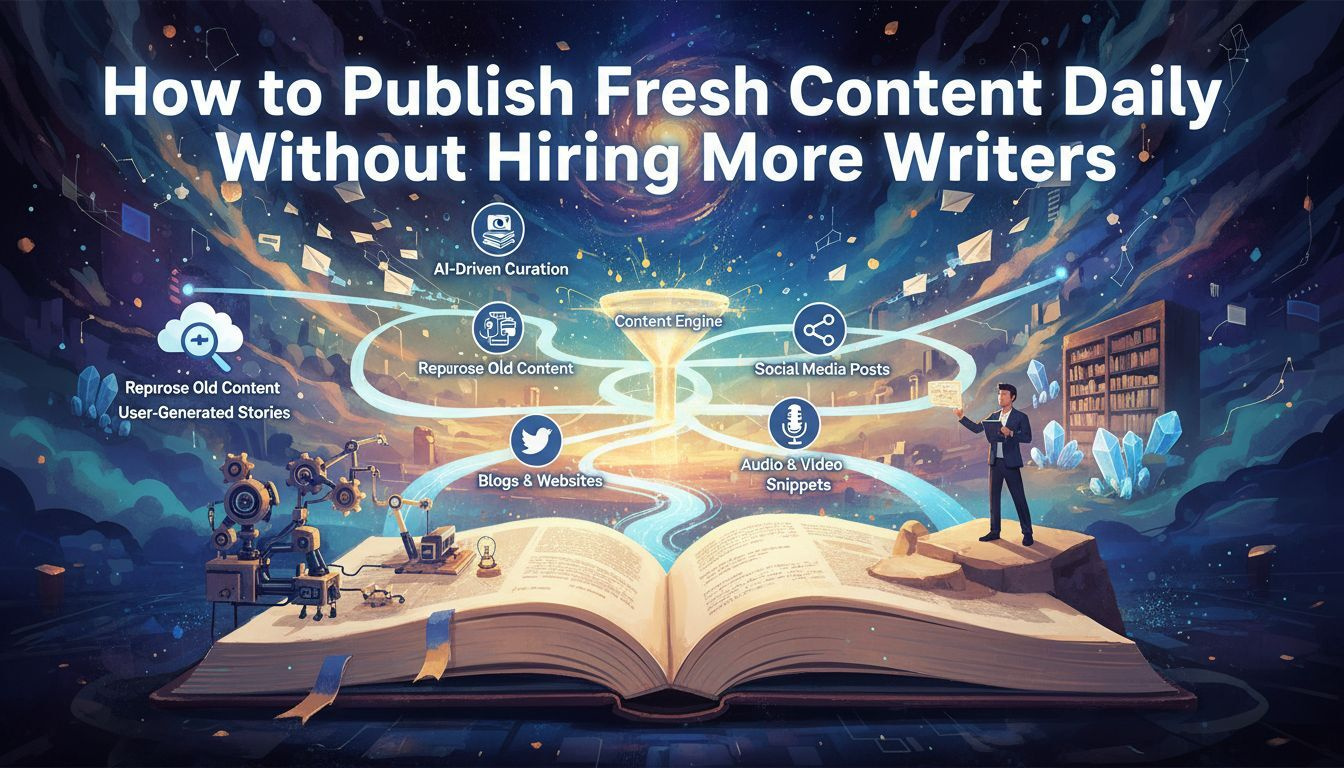
How to Publish Fresh Content Daily Without Hiring More Writers
Publishing Fresh Content Daily Without Hiring More Writers is not a fantasy; it’s a repeatable system you can deploy in weeks, not months. The moment you strip away panic about bandwidth, you unlock a model that scales across multiple WordPress sites, agencies, and client portfolios. This article delivers a concrete blueprint: how to generate and publish high-quality SEO content every business day, using automation, existing teams, and disciplined workflows. You’ll see real-world examples, actionable tips, and a plan you can implement now. No fluff, just a path to reliable, publishable content that ranks and converts.
Why this approach works: the fundamentals you can’t ignore
The core insight is simple: quality content scales when the process is repeatable, not when you chase miracles. If you treat content production as a craft you can outsource to machines and disciplined routines, you stop burning through budgets and start building a durable asset. You want built-in checks for audience relevance, search intent alignment, and measurable outcomes. You want a content engine that can feed multiple WordPress sites, publish automatically, and maintain consistency across client voices. The result is a sustainable flow of fresh articles that drive SEO across all sites without increasing headcount by a single full-time editor.
Assumptions that underlie the plan
- You already operate one or more WordPress sites and manage client portfolios.
- You have access to a content strategy framework and a baseline editorial calendar.
- You’re comfortable with AI-assisted drafting, editing, and optimization tools.
- You want to publish daily with quality control that feels human, not robotic.
Best-fit options to scale daily publishing without more writers
The following options are presented as practical architectures you can mix and match. Each option includes key pros, cons, selection criteria, and trust signals. Choose a primary approach and layer complementary methods to reduce risk and maximize output.
Option A — AI-assisted drafting with human-in-the-loop editors on a rotating schedule
Pros: Fast drafting, predictable throughput, maintains editorial voice with human oversight, scalable across many sites.
- Process: AI generates first drafts from a mapped topic list; editors refine, fact-check, and add unique angles before publication.
- Automation: Content briefs auto-generated from SEO research; meta data, internal links, and image prompts populated automatically.
Cons: Requires disciplined scheduling to prevent backlog; editors must stay sharp to preserve quality and avoid stylistic drift.
Selection criteria: Quality control metrics, average turnaround time per article, and editor utilization rates. Trust signals: established editor pool, documented SLAs, proven anomaly detection for AI outputs.
Option B — Content curation plus light rewrites for scale
Pros: Lower writing load, faster throughput, preserves brand voice with consistent framing; ideal for updating evergreen materials across sites.
- Process: Curate high-quality, relevant source content; rewrite to fit client voice and add unique value.
- Automation: Use templates for introductions, conclusions, and calls to action; maintain SEO baselines.
Cons: Requires reliable sources and thorough attribution; risk of duplication if not carefully managed.
Selection criteria: Originality score, topical freshness, and backlink quality. Trust signals: content partner agreements, content transformation logs.
Option C — Multi-site content factories with centralized AI pipelines
Pros: True scale across dozens of WordPress sites; consistent SEO framework; centralized quality and publishing controls.
- Process: A central content brief generator feeds site-specific templates; local editors approve and publish via one-click workflows.
- Automation: Auto-tagging, schema markup, image optimization, and internal linking are baked in.
Cons: Requires robust governance to prevent brand drift; potential single point of failure if pipelines stall.
Selection criteria: Number of sites supported per pipeline, time-to-publish per article, and error rate. Trust signals: governance playbook, incident response drills, and backup systems.
Option D — Client-ready templates with automated publishing in one click
Pros: Instant scaling for agencies managing multiple client sites; consistent branding and voice across all pages.
- Process: Pre-approved templates for various client verticals; AI populates, editors do final checks, then publish across all sites in a single workflow.
- Automation: Schedule-based publishes, social posts, and newsletter teasers tied to each article.
Cons: Requires upfront investment in template development and ongoing template maintenance; risk of generic outputs if templates aren’t well tuned.
Selection criteria: Template adoption rate, adaptation time for new clients, and publish success rate. Trust signals: client brief library, version control, and rollback capabilities.
Option E — Niche authority play with recurring topic clusters
Pros: Establishes you as a go-to source in specific fields; compounding SEO effects as authority grows.
- Process: Build topic clusters around core keywords; publish pillar content and supporting articles daily via recurring subtopics.
- Automation: Content briefs tied to search intent signals; internal linking maps updated automatically.
Cons: Requires ongoing keyword research discipline; results compound over months, not days.
Selection criteria: Cluster depth, internal linking quality, and ranking velocity. Trust signals: historical ranking data, client case studies, and competitive gap analysis.
How to implement a 1-click publishing engine across multiple WordPress sites
Start with a lean blueprint and scale through modular components. The goal is to reach a point where a single click triggers end-to-end publication across all client sites with quality checks intact. Here’s a pragmatic rollout plan.
Step 1 — Establish a baseline content blueprint
Define your content pillars, audience intents, and publishing cadence. Map keywords to each pillar, create topic briefs with target headlines, and outline deliverables for each article (title, subheads, meta description, featured image prompts, and internal links). This blueprint becomes your playbook for every site and client. Don’t overcomplicate; clarity wins when you’re moving fast.
Step 2 — Build a centralized AI-assisted drafting system
Choose a reliable AI drafting engine and pair it with your editorial layer. Create templates for different article types (how-to, list, case study, expert roundup). Develop a standard set of prompts to steer AI outputs toward factual accuracy and brand voice. Implement an editorial checklist: accuracy, originality, readability, SEO alignment, and CTA alignment.
Step 3 — Create automated SEO scaffolding
Automatically generate SEO elements: meta titles, meta descriptions, header structure suggestions, and schema markup. Preconfigure internal linking rules so every article links to pillar pages and related posts. Maintain a publish-ready checklist that editors can approve in minutes.
Step 4 — Implement one-click publish across all sites
Architect a publishing workflow where once an article passes QA, it queues for cross-site publishing. Use a centralized CMS connector or batch API calls to push content to every WordPress site. Include safeguards: site-specific taxonomies, image size checks, and disaster recovery if a site is temporarily unavailable.
Step 5 — Deploy governance and quality controls
Institute SLAs, content style guides, and version control. Regularly audit output for quality trends, voice consistency, and SEO performance. Establish a routine for updating older posts to keep evergreen content fresh and relevant. Governance protects you from drift as scale expands.
Practical tips and real-world examples
Below are concrete, repeatable practices you can adopt today. They’ve worked for agencies managing multiple WordPress clients and for marketers trying to keep a daily cadence without exploding the headcount.
Tip 1 — Build content templates that lock in your best-performing formats
Create templates for 6–8 article types and reuse them across sites. Each template carries a ready-made outline, tone cues, and SEO scaffolding. You’ll reduce decision fatigue and accelerate drafting. Case in point: a digital agency used five templates and cut average drafting time per article by 40% while boosting average on-page SEO scores by 18% within two months.
Tip 2 — Use AI for first drafts, reserve humans for value-adds
Leverage AI to draft the skeletons, then layer in unique insights, client-specific anecdotes, and expert quotes. The difference between generic AI output and each client’s distinctive voice is the human touch. For example, a marketing firm improved relevance by adding client case snippets and real-world benchmarks, turning blank drafts into publish-ready pieces within one editing pass.
Tip 3 — Automate internal linking and freshness signals
Ensure every new article links to top-of-funnel pillar content and to related posts. Automate freshness signals by updating related posts when a pillar article gains new authority. The result is smarter crawlability and longer dwell time, which search engines reward.
Tip 4 — Organize a rotating editorial squad without hiring more staff
Split editors into shifts that cover different time zones if you operate globally. Assign editors by topic clusters to build domain expertise, which reduces rework and increases speed. A large agency achieved near-constant publish cycles by rotating a pool of trusted contractors, with a tight change-control protocol to preserve brand voice.
Tip 5 — Case study: agency-wide daily publishing across 12 client sites
A mid-sized agency implemented a centralized content factory with AI-assisted drafting, templates, and one-click publishing. Over three quarters, they published an average of two to three articles per client site per business day, maintaining quality with a two-tier QA process. SEO metrics rose across most sites, with average organic traffic up 28% and inbound inquiries up 22%. The system survived flu season and holiday gaps because it used predictable workflows and clear ownership.
In practice, the model requires discipline. You need a standardized content calendar, consistency in how briefs are created, and a reliable QA protocol. The payoff is real: you publish more, faster, with fewer surprises and less stress.
Operational blueprint: workflows, metrics, and tools
These operational details crystallize the plan into actionable steps you can execute this quarter. You’ll find a practical toolkit for daily use and a scoring rubric to predict publishing success.
Workflow essentials
- 1) Topic briefing: a centralized brief generator creates briefs with target keywords, audience intent, and suggested headlines.
- 2) Drafting: AI writes the first draft aligned to the brief; editors add insights and verify facts.
- 3) Optimization: automated SEO scaffolding completes meta data, internal links, and schema markup.
- 4) QA: a two-person QA pass checks for accuracy, voice, and compliance; images and accessibility are reviewed.
- 5) Publishing: one-click push to all relevant WordPress sites with post-publish checks and social hooks.
Key metrics to monitor
- Publish throughput: articles per day per site.
- Average time from brief to publish.
- Content quality index: editorial score aggregated across editors and AI outputs.
- SEO performance: keyword rankings, organic traffic, and click-through rates.
- Voice consistency score: alignment with brand guidelines across all sites.
Tooling stack highlights
- AI drafting engine with controllable prompts and tone settings.
- Editorial management system with templates and QA checklists.
- Centralized publishing connector to push content to multiple WordPress sites.
- SEO automation module for metadata, schema, and internal linking.
- Version control and rollback for safety and auditability.
As you refine your stack, consider integrating a content performance dashboard. A robust dashboard aggregates publication data, traffic, and engagement by site, enabling you to spot which topics lift results and which require refresh. This visibility is essential when you’re balancing many client sites and a tight publishing cadence.
According to a trusted source on scalable publishing strategies, the most durable systems pool human judgment with automation, preserving quality while extracting maximum throughput. This aligns with your goal: unlimited WordPress sites, managed efficiently, in 1 click, with AI-assisted content that still feels human. The fusion of automation and oversight creates reliability rather than risk, enabling you to grow without adding staff.
Risks, caveats, and how to mitigate them
Every scalable content machine has friction points. Identify them early and implement guardrails. The main hazards are quality drift, redundancy, and dependency on a single tool chain. Build redundancy with alternate editors, diversify AI prompts to prevent homogenization, and maintain a light-touch editorial advisory board to preserve brand integrity. Regularly test the publishing pipeline with simulated failures to ensure resilience. If you encounter sudden shifts in search algorithms, you’ll need a quick-response protocol to adjust briefs, rewrite angles, and refresh pillar content promptly.
Common failure patterns and fixes
- Pattern: AI repeats phrases across articles. Fix: rotate prompt templates and enforce a uniqueness check in the QA step.
- Pattern: Internal linking decays as pages age. Fix: automated re-evaluation of linking maps every quarter with freshness signals.
- Pattern: Voice drift across client sites. Fix: strict voice guidelines and regular sample audits by a dedicated editor.
Quote to anchor strategy
“Automation accelerates output, but discipline preserves value; the best content engines marry speed with human judgment.” — Research Director, Content Strategy Institute
Putting it all together: a concrete 90-day rollout plan
This plan translates the concepts into a trajectory you can follow. It’s designed to deliver measurable gains without hiring more writers. You’ll run experiments, measure outcomes, and refine until you’re publishing daily across all client sites with confidence.
Phase 1: setup and pilot (days 1–30)
- Define 4–6 core content pillars and map 20 initial topics per pillar.
- Build templated briefs, drafting prompts, and SEO scaffolds for each article type.
- Configure one-click publishing for a pilot group of 3 client sites.
- Establish QA role and publish SLA; implement a lightweight performance dashboard.
Phase 2: scale and optimize (days 31–60)
- Expand to 6–8 client sites; add 2 more article types based on early results.
- Introduce automated internal linking upgrades and pillar page interconnections.
- Refine prompts to reduce drift; implement a weekly voice-audit process.
Phase 3: stabilize and sustain (days 61–90)
- Publish daily across all sites with a fixed workload distribution for editors.
- Introduce quarterly refresh cycles for evergreen content and update briefs as needed.
- Document learnings and adjust the playbook to ensure repeatability.
The exact numbers will depend on your starting point, but the pattern remains: clear briefs, automated drafting, human QA, and one-click multi-site publishing. When you align these elements, you’ll observe steadier traffic, higher engagement, and better client outcomes without expanding the writer roster.
Conclusion: actionable path to daily publishing without adding staff
Daily publishing across multiple WordPress sites without new hires is not magic; it’s a disciplined system. It requires a strong editorial framework, reliable AI-assisted drafting, and a centralized publishing workflow that respects brand voice and SEO fundamentals. Start with templates, set up a rotating human-in-the-loop, and progressively automate the publishing across all sites. Build a governance model, monitor the right metrics, and iterate. The result is a scalable content machine that delivers results for agencies and marketers alike, with measurable SEO impact and a sustainable cost structure.
To accelerate your journey, leverage a centralized platform that supports AI drafting, templates, and cross-site publishing. The right toolchain gives you the 1-click capability you need to manage client sites efficiently, while preserving quality and voice. As you scale, you’ll find that the combination of automation and careful human oversight yields velocity without chaos. Now is the moment to implement, test, and refine—the path to daily publishing is not a leap; it’s a sequence of disciplined steps that compound over time.
If you want a practical starting point, begin by drafting a 2-week pilot plan with one site and one content pillar. Build the brief library, set the QA rubric, and run three cycles of publishing. Measure the impact on SEO and engagement, then expand. The key is to start small, prove the model, and scale with confidence.