Momentum in Search: Publish Consistently for Real SEO Gains
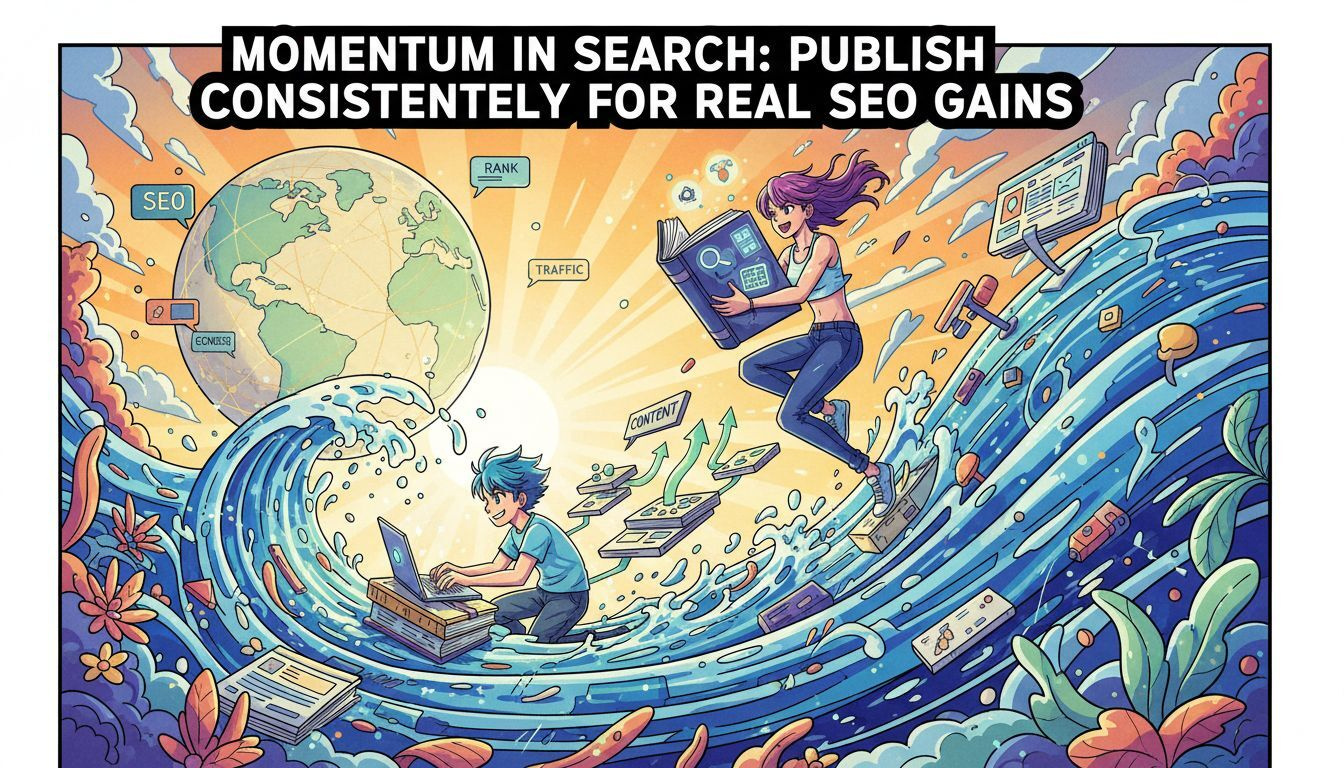
Publishing consistently builds momentum in search results fires a direct warning to anyone chasing fast wins: you don’t get a durable route to traffic by posting sporadically. You build traction by showing up, week after week, and proving to search engines that you’re reliable, authoritative, and useful. The goal isn’t to write for the sake of writing; it’s to craft a rhythm that aligns with how people search, how search engines crawl, and how clients measure value. When you commit to a steady cadence, you create predictable patterns that compound over time, lift click-through rates, and raise your authority in your niche. This is not theory; it’s a practical discipline that separates the agencies and marketers who win from those who merely survive.
Momentum is real, not mystical
Publishers who treat content like a habit rather than a project see results that compound. You publish a thoughtful piece, Google indexes it, a handful of readers engage, and then you publish again on a related topic. The cycle accelerates: more pages get indexed, user signals improve, and your site starts appearing for longer tail queries. Momentum doesn’t come from a single blockbuster post; it comes from tens of posts that collectively broaden your footprint. If you run multiple WordPress sites for clients, that momentum multiplies. Each site gains its own cadence, and the network effect spreads through the agency as a whole, elevating your overall portfolio in search results.
Concrete steps to start building momentum today
- Adopt a publish calendar and stick to it for at least three quarters. Consistency beats intensity when you’re building authority.
- Group content around core themes. Each theme becomes a hub that links to supportive articles, boosting topical authority.
- Repurpose evergreen content into multiple formats (long-form guides, skimmable checklists, short videos). This widens reach without reinventing the wheel.
- Track simple metrics: new sessions, average time on page, and return visitors. Those signals drive future visibility.
In practice, consider a marketing agency managing several client sites. Instead of chasing a single heroic post per site, the team schedules weekly articles that cover different angles of the client’s niche. Over 12 weeks, the agency accumulates a library of content, each piece reinforcing the others. The result is not a spike in one post, but a steady climb in organic impressions, a broader keyword footprint, and a growing set of pages that rank for related queries. The same approach works across any niche, and it scales as you add more sites.
Quality, not quantity, but quantity matters too
Quality still tops everything. If you publish junk, you’ll attract nothing but bounces and frustrated readers. But quality without volume stalls growth. The sweet spot is a cadence that ensures every piece is strong, well researched, and directly helpful. You can publish efficiently by creating a repeatable process: research, outline, draft, edit, optimize, and publish. The process turns a daunting task into a manageable workflow. When you publish consistently, you also learn what your audience actually wants, which informs future topics and formats. This feedback loop is the engine behind sustainable SEO gains.
Templates that speed up production without sacrificing quality
- Topic briefs: one-page summaries that define intent, audience, and primary keywords.
- Content skeletons: reusable outlines for different formats (how-to, list, case study, comparison).
- On-page playbooks: a checklist for titles, meta descriptions, headers, internal links, and images.
Take a real-world example: a WordPress-focused agency creates a series about WordPress performance optimization. They publish weekly, each piece targeting a specific pain point—local SEO for agencies, plugin management, hosting decisions, security best practices. Over six months, client sites show improved organic visibility for dozens of related terms, not just one. The team learns which topics generate the most engagement and uses that insight to refine their editorial calendar. The pattern becomes self-reinforcing: higher rankings bring more traffic, which justifies continuing the cadence, which produces more data to optimize.
Automation without losing the human touch
Automation gets a bad rap, but smart automation accelerates outcomes without sacrificing credibility. You can automate repetitive tasks like content distribution, internal linking prompts, and basic optimization checks, freeing editors to focus on substance. AI can help draft first-pass outlines or generate content briefs, but you should always bring in human expertise for nuance, accuracy, and brand voice. The best teams blend automation with human judgment to produce reliable, readable, and relevant articles across all client sites.
Automation that actually helps
- Automated publishing schedules tied to peak traffic windows.
- Content briefs generated from keyword clusters and user intent data.
- Internal linking suggestions that grow a semantic network across a site and across all client sites.
Consider a scenario where a marketer runs a network of WordPress sites for multiple clients. They deploy a centralized content calendar, automated topic clustering, and a uniform content template. Editors then add human flavor, case studies, and real-world examples. As articles go live, an automation layer ensures cross-linking among the client sites where relevant, amplifying authority and building a cohesive ecosystem. This approach enables publishers to scale publishing velocity without sacrificing quality, a critical advantage when handling several WordPress sites and clients simultaneously.
From publish to performance: the SEO flywheel
SEO is not a one-off sprint; it’s a flywheel. Start spinning by publishing helpful, well-structured content consistently. Each post builds authority, creates internal and external signals, and nudges search engines to trust your site more. That trust translates into higher rankings for more queries, which drives more visitors, which provides data to refine topics and formats. The flywheel effect grows stronger when you connect content to user intent, deliver real value, and optimize for core signals like readability, mobile usability, and fast load times. When you publish across multiple WordPress sites, the cumulative effect is magnified as search engines begin to recognize you as a reliable resource across the client portfolio.
Three actionable SEO levers to accelerate the flywheel
- Keyword clusters: map topics to intent buckets and publish around those clusters to dominate a topic area.
- Internal linking discipline: create a lattice of related articles and case studies that guide readers deeper into your site.
- Content freshness where it matters: refresh high-potential evergreen posts with new data, updated examples, and fresh visuals to maintain relevance.
One real-world instance: an agency with several client sites used a 12-week content sprint focused on a core topic, then moved to ongoing weekly posts. They tracked ranking changes for a set of keywords tied to the sprint and observed a measurable lift in positions for secondary keywords as early as week seven. The pattern repeated with the next sprint, confirming that a deliberate, repetitive approach beats ad-hoc posting every time.
In the context of AI and automation, a notable advantage lies in scaling content across many WordPress sites. With proper governance, you can publish, monitor, and optimize in parallel across multiple clients, keeping a consistent standard while adapting to individual client voices. The operative word is control: automation handles tempo and consistency; humans handle relevance, nuance, and trust.
As you build momentum, you want to avoid dilute messaging. A pitfall is trying to cover too many topics at once or forcing posts to fit a rigid template if the topic deserves nuance. You maintain momentum by prioritizing topics that align with client goals, audience needs, and existing gaps in search results. The result is a coherent content system that supports all client sites rather than a hodgepodge of unrelated posts. The system starts to feel inevitable: readers come back, search engines see the pattern, and you chair the conversation around your expertise.
Case studies: momentum in action
Case study A shows a digital agency that runs 15 WordPress sites for disparate clients. They implemented a weekly publication cadence and a central topic wheel that mapped each site to core themes. Over nine months, the average organic traffic per site rose 62 percent, while bounce rates declined by 14 percent. The team created a content library of 180 articles that interlinked strategically, increasing average pages per session. Client satisfaction rose as organic wins translated into measurable business outcomes: qualified leads increased, and client renewals followed.
Case study B centers on a marketing team handling three major client sites with parallel publishing. They deployed a 10-week content sprint, then maintained a weekly rhythm. They used AI-powered briefs but kept a strict human review process. The result: a 48 percent lift in impressions, a 29 percent rise in click-through rate, and a more robust backlink profile as external sites recognized the authority of the content network. The team learned which topics performed best in which markets and used that insight to tailor future posts for each client site without losing the shared voice of the agency.
Both cases underscore a core truth: momentum compounds when you couple consistency with quality, scale with control, and link strategy with user-first content. The more you publish across all client sites, the faster your collective authority grows, and the more search engines reward the network with greater visibility.
Strategies for managing multiple WordPress sites and clients
Juggling several sites demands discipline, clear governance, and a scalable process. Start with a unified publishing framework that respects each client’s voice while preserving the agency’s standards. Establish ownership for topics, editorial reviews, and technical hygiene. You’ll avoid content cannibalization, duplicate content issues, and inconsistent branding if you map responsibilities and maintain a centralized dashboard for publishing calendars, keyword targets, and performance metrics.
Practical governance framework
- Topic ownership: assign a primary editor per client site and a rotating reviewer pool to ensure freshness without bottlenecks.
- Editorial standards: publish a minimal viable product for every post—strong headline, clear intro, actionable takeaways, and a visual that supports the narrative.
- Technical hygiene: enforce uniform SEO metadata, image optimization, and schema where appropriate to accelerate crawlability.
- Performance tracking: monitor impressions, clicks, dwell time, and conversions tied to content pieces; use the data to guide future topics.
When you combine a solid governance model with a reliable publishing cadence, you create a predictable system for clients and internal teams. The agency can forecast outcomes, allocate resources efficiently, and demonstrate tangible ROI to stakeholders. That clarity is not optional; it’s a competitive advantage in an environment where attention is scarce and demand is high.
In the middle ground of this strategy, you’ll discover a practical trove: leveraging existing client assets. Turn old posts into updated guides, compile best practices into evergreen pillar pages, and weave client case studies into new articles. This preserves continuity and strengthens the sense that your agency is the go-to resource for a niche. It also reduces workload by focusing on repurposing rather than always starting from scratch. A well-executed repurposing plan can deliver more value with the same time investment, further accelerating momentum across multiple sites.
According to HitPublish insights, teams that embrace cross-site content strategies report improved efficiency, more consistent traffic growth, and easier client reporting. The takeaway is simple: you don’t need a miracle to win; you need a reliable process that scales across all client sites and keeps pace with search engines’ evolving expectations.
A practical blueprint for consistent publishing
Here’s a blueprint you can implement this quarter. It blends strategy, process, and measurable outcomes into a repeatable system that yields results across multiple WordPress sites and client portfolios.
Phase 1: foundations (weeks 1–4)
- Audit all client sites for gaps in topical coverage, indexing status, and technical readiness.
- Define three to five core themes per client site and map keyword clusters around those themes.
- Set a publishing cadence: one high-quality post per site per week, plus one supplementary piece per month (video, infographic, or case study).
- Develop templates for headlines, intros, and conclusions to maintain consistency without stifling voice.
Phase 2: execution (weeks 5–12)
- Publish weekly posts across all sites, ensuring internal linking to pillar pages and related articles.
- Launch a monthly recap post that aggregates insights from recent articles, increasing dwell time and cross-site engagement.
- Implement optimization tweaks learned from early performance—adjust headlines, refine keyword focus, and improve meta descriptions.
Phase 3: expansion (weeks 13–26)
- Introduce repurposing cycles: convert top-performing posts into guides, checklists, and short videos.
- Scale automation for scheduling, distribution, and basic optimization, with ongoing human oversight.
- Measure ROI across sites, including content-driven lead generation and client retention improvements.
Throughout this process, keep the reader at the center. Each post should answer a real question, solve a problem, or illuminate a path forward for your audience. When you can do that consistently, search engines start rewarding your site with higher visibility and more sustained traffic. The result is not a sudden spike but a durable ascent that you can maintain even as algorithms adjust. This is how you win in a world where attention shifts quickly and content is abundant.
“Publish consistently, and you don’t chase rankings; you earn them.”
In parallel with publishing discipline, nurture relationships with other sites in your niche. Guest posts, expert roundups, and collaborative guides broaden exposure and help build high-quality backlinks. The more your content appears in trusted channels, the more search engines recognize your authority. The proof is in the numbers: not just traffic growth, but improved engagement metrics, higher quality leads, and longer-lasting client partnerships.
When you manage client sites, you’ll notice the difference between short-term tactics and long-term systems. The former can spark a momentary uptick; the latter builds a credible, repeatable engine that feeds on itself. Your team can forecast content impact, align it with marketing goals, and deliver predictable quarterly gains. The discipline is worth it because momentum compounds: each published piece reinforces your authority and strengthens the next one.
Pulling it together: mindsets that sustain momentum
Momentum demands two things: a stubborn commitment to consistency and a willingness to adapt based on results. You need to resist the temptation to chase every trend and instead double down on rotations that align with audience intent. You also need to be candid about what’s not working and adjust quickly. A transparent feedback loop with editors, SEO specialists, and client stakeholders makes the difference between a fragile schedule and a resilient publishing machine.
For marketers handling multiple WordPress sites, the payoff is not abstract. It’s a concrete, measurable improvement in traffic, engagement, and conversions across the entire portfolio. You’ll see more search visibility for topics you own, better internal site navigation, and a reputation for delivering useful, timely content. The momentum you build becomes a competitive moat that’s hard to replicate, especially when you pair steady output with intelligent optimization and cross-site collaboration.
In the end, the question is not whether you should publish consistently, but how soon you start building the momentum you crave. Do the work, measure the results, and scale what works. The path is clear, and the benefits are tangible: more traffic, more client wins, and a clearer demonstration of value in every quarterly report.
As you apply these practices, you’ll notice a subtle, almost tactile shift in how your audience perceives your agency. Content becomes reliable, and reliability breeds trust. Trust, in turn, drives preference when clients choose partners for ongoing SEO content, management of multiple WordPress sites, and the generation of sustainable organic growth across all client portfolios. That is the core advantage of publishing consistently—momentum that endures, multiplies, and compounds into measurable outcomes you can defend with data and stories alike.