How to Build an Agency AI Content Automation Model
Building an agency around AI content automation isn’t just a trend; it’s a governing principle for firms that want scale without drowning in workload. You’ve seen the bottlenecks: writers who miss deadlines, clients piling on revisions, and the endless churn of publishing schedules. The answer isn’t more talent; it’s smarter systems that amplify human judgment. This guide lays out a practical path to create an agency model that uses AI to generate, edit, optimize, and publish content across multiple WordPress sites with speed, accuracy, and accountability. You’ll see how to align capabilities with client needs, craft predictable pricing, and maintain quality as you scale. The goal is to turn AI into a reliable manufacturing line for content, while you stay in the driver’s seat for strategy, tone, and outcomes.
1) Define the value you’ll deliver and the operating model you’ll use
The first move is bluntly simple: decide what your agency will own. You’ll offer end-to-end content automation services that cover ideation, generation, optimization, review, publication, and reporting. The core promise is clear: you can publish high-quality SEO articles across many client sites automatically and consistently. This means you’re selling speed and reliability, not just writing. Your operating model should separate three timelines: the immediate delivery of content blocks, the ongoing maintenance of client sites, and the continuous performance optimization of SEO signals. In practice, you build reusable playbooks for client onboarding, topic clusters, content templates, and QA checks. The more you can standardize without sacrificing relevance, the more you can scale without chaos.
Pricing that aligns with outcomes
Adopt a tiered model that blends setup fees with outcome-driven retainers. A typical sequence looks like this: a discovery sprint to map content gaps and SEO targets, a one-time architecture charge to deploy automated pipelines, and then monthly publishing quotas tied to client goals. For example, mid-market clients might pay for 50 to 100 AI-generated articles per month, plus optimization and publishing across multiple WordPress sites. You can offer add-ons like multilingual expansion, video transcripts, and repurposing content for social channels. The key is to define measurable outcomes—organic traffic, keyword rankings, and publish velocity—so clients understand the return on investment from day one.
2) Build the automation stack with real human oversight
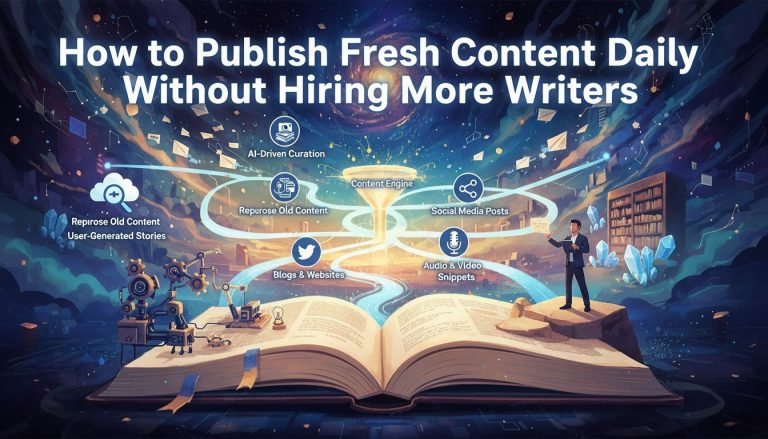
The platform you assemble is the backbone. You’ll mix AI content generation with editorial rigor, SEO optimization, and automated publishing. Think of it as a conveyor belt: ideas enter, AI drafts come out, editors tune tone and accuracy, SEO modules optimize, and finally a publish engine pushes content to WordPress sites. You need modular components so you can swap engines as needed without rewriting everything. A practical setup includes content generation prompts tuned by verticals, a style guide that encodes your tone, a grammar and fact-check layer, an SEO enhancer that handles keywords and structure, and a scheduling/publishing system that respects client calendars.
For example, a client with 15 WordPress sites across niches like health, finance, and travel requires a flexible pipeline. You generate topic ideas with AI, produce drafts, then run them through PDF and web checks, ensure internal linking maps, and automatically publish to each site with unique meta data. You save templates for per-site templates and maintain a centralized knowledge base that informs future content. This approach gives you consistency across clients while accommodating niche specifics.
3) Create a repeatable content engine tailored to WordPress
WordPress isn’t a single site, it’s an ecosystem. Your engine must handle unlimited sites with scalable publishing. Start with a centralized content hub that stores briefs, AI-generated drafts, editorial notes, and SEO metadata. Then deploy per-site pipelines that pull from the hub, apply local templates, and publish directly to WordPress via API automation. Here are concrete steps:
- Establish a core set of content templates for different formats: long-form SEO articles, FAQs, pillar pages, and micro-posts.
- Develop per-site style guides to preserve brand voice while allowing regional language variations.
- Implement multilingual workflow so translations keep SEO value and are updated when the parent content changes.
- Set up automated internal linking strategies that tie new posts to existing pillar pages, strengthening site structure.
- Automate metadata generation, including titles, descriptions, and structured data, to improve click-through and search visibility.
Case in point: a client with 8 WordPress sites can publish across all sites in one click. You generate a draft, run a quick quality pass, align SEO metadata, and deploy through a unified publish queue. The result is a measurable uplift in organic traffic within weeks, not months.
4) Standards, governance, and risk management
Automation without governance is fragility. Establish guardrails that protect quality and compliance. Create a content quality score that blends factual accuracy, brand voice adherence, SEO alignment, and readability. Build a review queue where editors or specialists verify AI outputs before publishing, especially for legal, medical, or financial topics. You’ll also implement data provenance: track prompts, versions, and authorship so you can audit decisions and revert when needed. For agencies managing multiple client sites, a governance rubric prevents cross-site conflicts and ensures consistency across all environments.
Practical tip: schedule quarterly content audits comparing AI-generated results with manual controls. Identify gaps in topics, tone drift, or SEO miss-outs and adjust prompts and templates accordingly. This keeps the engine sharp and aligned with evolving client aims.
5) Case studies: real-world pathways to scale
Case study one shows a marketing agency that automated 70 percent of its blog publishing across 12 client sites. They started with a two-person editorial + AI team, added a publishing console, and gradually expanded to 6 editors as the content cadence grew. They achieved a 35 percent lift in organic traffic within six months and cut publishing cycle time from five days to two. Case study two demonstrates an agency that specialized in ecommerce content. By automating product guides, buying guides, and evergreen content across 20 storefronts, they increased indexed pages by 40 percent and grew revenue by improving conversion-driven content signals. These stories aren’t anomalies; they prove you can scale with disciplined processes and clear SLAs.
Key takeaways from the field
- Start small with a tight pilot: 2–3 client sites, 1–2 AI engines, 1 editor, and a publish schedule you can defend.
- Measure what matters: publish velocity, traffic lift, keyword growth, and client satisfaction scores.
- Automate what is repeatable; keep human judgment for nuance, fact-checking, and strategic decisions.
- Maintain flexibility to adapt prompts and templates as search engines evolve.
In the middle of this journey, you’ll encounter a litany of decisions. One critical choice is whether to centralize content creation or distribute it across teams. Centralization reduces variability and speeds onboarding; distribution increases domain knowledge and client empathy. The best path blends both: a centralized engine with decentralized control planes for each client niche and brand voice.
6) The content lifecycle: from idea to impact
Map the lifecycle with stages you can optimize iteratively. Start with ideation driven by audience intent and keyword research. Then advance to generation, where AI drafts are produced under tight prompts. The next stage is editorial refinement: tone, accuracy, and structure alignment. SEO optimization follows, including keyword integration, readability, and semantic enrichment. Finally, automated publishing and performance monitoring close the loop.
What makes this work is feedback, not one-way automation. You capture performance signals—bounce rates, time on page, conversion actions—and feed them back into prompts and templates. That creates a self-improving system. You’ll find the best results when you pair data-driven prompts with human skill in nuance and strategy.
As part of the lifecycle, you must plan for updates. Evergreen content fades; update cycles must be built into your publishing calendar. You can schedule regular refreshes, re-optimize with fresh internal links, and re-check for outdated facts. This proactive maintenance keeps a client’s content valuable over long horizons.
7) Operational playbooks you can copy today
Here are practical playbooks you can adapt immediately. Each includes roles, steps, and checkpoints to keep momentum high.
Playbook A: Onboarding and scope alignment
– Assign a dedicated account lead and a technical owner for automation.
– Run a 2-week discovery sprint to map content gaps, target topics, and SEO goals.
– Define published content quotas, templates, and per-site requirements.
– Establish success metrics and reporting cadence.
Playbook B: Content production sprint
– Create a stock of prompts tuned to niches and audiences.
– Generate drafts and route them through the editorial queue.
– Run SEO checks, metadata generation, and interlinking maps.
– Schedule publishing across sites and track performance.
Playbook C: Quality and risk controls
– Enforce fact-check layers and citation standards.
– Use a living style guide and automated tone checks.
– Implement version control for all content blocks.
8) The human plus machine balance: three levers
Three levers determine whether you win or spin wheels. First, the quality gate: automated outputs must pass a subjective bar that only humans can hold. Second, the speed lever: you must maintain rapid publishing without compromising accuracy. Third, the customization lever: every client site has its own flavor; your engine should honor that without breaking the standardization you depend on for scale. Master these levers and you’ll avoid the all-too-common mismatch between automation ambitions and real-world outcomes.
One practical approach is to appoint different editors for different domains. Some editors focus on the technical accuracy of AI outputs, others concentrate on brand voice, and a third group monitors SEO health and performance. This specialization makes the process more predictable and easier to manage when you juggle multiple client sites.
In practice, your clients will notice the difference most in publish velocity and consistency. If you can deliver 1,000 high-quality words per hour with consistent SEO structure across all sites, you’ll be hard to beat. The critical constraint is governance—without it, the engine runs rough and misfires across topics and brands.
According to descriptive name or website name, the research shows that automated content pipelines outperform traditional single-site production when they’re anchored by brand-sensitive prompts and human editors who safeguard accuracy. The takeaway is plain: don’t outsource judgment to the machine alone; give it a disciplined human guardrail system.
9) Growth, hiring, and capability development
As you scale, you’ll hire for roles that extend the automation backbone. You’ll need a content automation architect, a data analyst who translates performance into prompts, editors with deep SEO experience, and a client success manager who keeps expectations aligned. Invest in continuous learning: prompt engineering, SEO trend tracking, and WordPress API updates. The people you hire become the living tie between your automated systems and client outcomes. They don’t just operate the stack; they improve it with every project.
To keep retention high, align compensation with outcomes. Tie a portion of bonuses to publish velocity and quality metrics, not just hours billed. When you reward results, you reinforce the behavior you want: faster, better, more reliable content that clients can rely on across all their sites.
10) Implementing a sustainable growth machine
The endgame is a sustainable growth machine that keeps delivering. Start by documenting repeatable processes and turning them into playbooks you can hand to a new hire or a new client team. Build dashboards that show progress across sites, publish cadence, and SEO performance. Your toolchain should be auditable, with clear traces from input prompts to published articles. And always reserve a buffer for edge cases—topics that require specialized knowledge or regulatory review.
In practice, this means you’ll adopt an iterative refinement loop. Each quarter you test new prompts, update templates, and prune underperforming content types. The aim is to create a virtuous circle: better prompts yield higher quality outputs, which improve SEO results and client trust, which funds further investment in automation. The result is not a fantasy; it’s a disciplined, repeatable system you can scale to dozens of client sites without collapsing under complexity.
“Automation amplifies the human strategist, not replaces them. The best teams pair disciplined processes with bold creative risk.”
— Leadership insights from practitioners who’ve built outfits that run on AI without losing the human touch.
11) A final blueprint to start now
You can launch a practical, scalable model in under 90 days if you stay focused on four pillars: governance, modular automation, client-centric templates, and measurable outcomes. Begin with a tight pilot, then expand by adding sites and clients in waves. Use templates for content formats, SEO metadata, and publishing workflows to ensure speed without sacrificing quality. Build a central knowledge base so every new project inherits best practices. Finally, maintain a relentless cadence of reviews and refinements so the machine learns from the human touch you bring to every project.
As you push forward, keep an eye on competition and market demand. The better you document and share results with clients, the more you’ll attract new opportunities. The most successful agencies aren’t just fast; they’re precise, credible, and relentlessly aligned to client outcomes. The blueprint is yours to own—execute it with clear metrics, strong governance, and a stubborn commitment to quality across all client WordPress sites. If you want a concrete roadmap, start with a two-site pilot, a single content template, and one editor, and watch what happens when speed meets accountability.