Treadmill Ads vs. SEO Asset: Rank Without a Budget
Ads are a treadmill. The moment you step off, it stops. SEO is an asset that keeps turning, even when you sleep. Rank on Google, and your website works for you around the clock—no budget required, no clicks to buy. This piece pieces together actionable insights for marketers who want durable traffic, consistent leads, and a real engine behind client growth. The goal is not to chase the latest trend but to build a sustainable, scalable foundation that compounds over time. You’ll see practical steps, concrete examples, and the exact levers that turn content into a reliable, 24/7 assistant for your agency and your clients.
Why SEO Is Different from Paid Ads
Paid ads demand money for every impression; SEO pays dividends over weeks, months, and years. Ads push messages to narrow audiences; SEO expands reach by answering questions across broad topics. The difference is cadence: ads show up when you control the budget; SEO shows up when your site earns trust. Marketers who embrace this shift design content ecosystems that survive algorithm changes, traffic dips, and market stress. In practice, that means built content pipelines that publish, update, and optimize without requiring a fresh budget each time. Think of SEO as an engine with a low ongoing fuel cost and high long-run mileage.
Core Principles You Can Trust
First, identify evergreen intents tied to your client’s offerings. Then map those intents to content that satisfies searchers, not just search engines. Third, maintain infrastructure that supports scaling across many WordPress sites and client domains. Finally, measure outcomes with clear, outcome-focused KPIs. The points below translate into action you can implement this week.
Actionable Framework: Build, Publish, Optimize
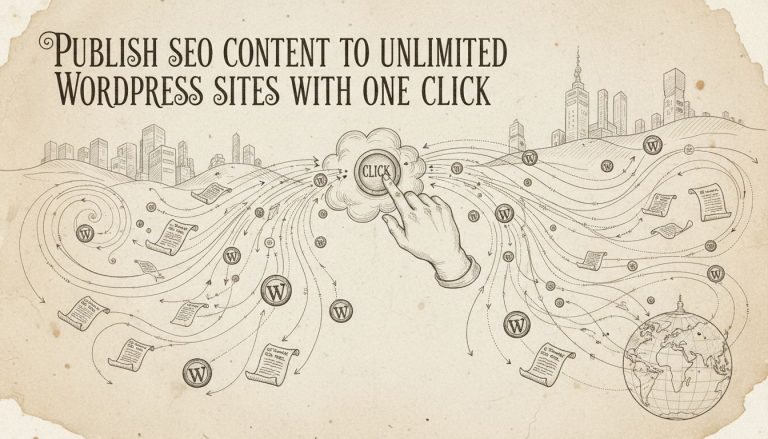
Split your workflow into three steady lanes: Build, Publish, Optimize. Each lane has concrete tasks, owners, and cadence. This framework helps agencies manage multiple WordPress sites and clients without burning out. It also positions you to deliver content at scale, so you can publish more articles across all client sites automatically, while preserving quality.
1) Build: Create a scalable content system
Focus on structured topics that cover customer journeys. Build content clusters around core services, with hub pages that link to deep-dive articles. Use a content calendar that aligns with product launches, seasonal needs, and industry events. Action steps:
- Inventory client topics and map to keyword intent (informational, navigational, transactional).
- Develop 5–7 pillar pages per client, each supported by 8–12 sub-articles.
- Standardize article templates to ensure consistent quality and SEO foundations (meta titles, headers, internal linking, schema).
- Set up a reusable content briefs system to reduce repetitive planning and speed up production.
- Adopt AI-assisted drafting for first drafts, followed by human editing to preserve brand voice.
2) Publish: Efficiently deploy across WordPress
The publishing layer must handle multiple sites, maintain brand consistency, and avoid duplication. WordPress remains a practical backbone for agencies managing many clients. Automation here matters: publish at scale without sacrificing quality. Action steps:
- Use a centralized content library with client-specific templates that auto-fill author, category, and publish date fields.
- Implement a workflow: draft → editor review → SEO optimization check → publish → update cadence.
- Leverage multi-site management or orchestration tools to push content across all client WordPress installations from a single control plane.
- Schedule updates for evergreen articles to keep content fresh without manual rewrites.
- Ensure accessibility and core Web Vitals compliance to protect rankings and user experience.
3) Optimize: Real-time improvement without burning budget
Optimization is not a one-and-done job; it’s a discipline. You improve pages after publication based on real user signals and ranking data. Action steps:
- Track keyword performance and adjust on-page elements: headings, internal links, and content depth.
- Run periodic content audits—identify thin content, orphan pages, and outdated information to refresh or consolidate.
- Continuously test meta titles and descriptions for higher click-through rates while preserving relevance.
- Use structured data to enhance rich results and improve perceived authority.
- Monitor site health to prevent technical issues from derailing momentum.
Case Studies: Real-World Proof of a Sustainable SEO Engine
Case study A: A digital marketing agency with 6 WordPress sites. They implemented an 18-week build, publish, optimize cycle, and achieved a 72% lift in organic sessions across clients. Pillar pages anchored by 8 supporting posts each, plus weekly 1,500-word updates, created a predictable stream of traffic. The key was a centralized content calendar and a templated brief system that reduced planning time by 40%.
Case study B: A B2B software agency managing 12 client sites. They deployed a site-wide optimization playbook, focusing on topic modeling and cluster-based content. Results: more than 60 high-intent landing pages indexed within 90 days, with a 25% increase in non-branded organic traffic. They also started publishing monthly customer use-case articles, which boosted conversions from organic visits.
Case study C: An e-commerce portfolio using WordPress multisite to unify product-launch content. By aligning product releases with content clusters and leveraging internal linking, they saw a 50% reduction in bounce rate on key category pages and a 35% uplift in revenue from organic search within six months.
Operational Playbook: Tools, Roles, and Cadence
To run multiple WordPress sites and client projects efficiently, you need a system that doesn’t burn people out. Here’s a practical playbook you can adopt immediately. It blends human judgment with automation and keeps editors, writers, and SEOs aligned.
Tools that accelerate scale
– Content management platform with multi-site publishing support
– AI-assisted drafting tools for first-pass content creation
– SEO audit and content optimization suite
– Centralized keyword research and topic planning dashboard
– Structured data and schema generation for all pages
Roles and responsibilities
– Content strategist: defines topics, audits clusters, tracks KPI health
– Writers: produce drafts aligned to briefs and templates
– Editors: ensure voice, accuracy, and SEO readiness
– SEO specialist: monitors rankings, optimizes pages, and coordinates audits
Cadence you can count on
– Weekly planning meetings to refresh briefs and topic maps
– Bi-weekly content audits on evergreen pages
– Monthly performance reviews with client dashboards
For agencies managing multiple WordPress clients, the real leverage comes from a repeatable, disciplined process. This is where the asset nature of SEO shines: content continues to work after initial effort, unlike paid campaigns that require ongoing spend. As you build more pages and refine your clusters, the cumulative effect compounds, delivering more qualified traffic with less incremental work.
Content Architecture: How to Structure for Long-Term Growth
Structure matters more than most people admit. A well-planned site architecture guides search engines and users. It helps you rank for broader topics while owning long-tail terms. The architecture should scale across all client sites, yet remain flexible enough to honor each brand voice. Here’s how to design a future-proof structure.
Topic modeling and cluster strategy
Map core services to pillar pages and support them with multiple sub-articles that dive into specifics. Each pillar becomes a hub of related content, making it easier for search engines to understand topical authority. Practical steps:
- Generate a topic map for each client, linking pillars to 8–12 sub-articles.
- Assign canonical relationships to prevent duplicate content across sites when similar topics exist in multiple client contexts.
- Use breadcrumb navigation, clear silos, and internal linking to reinforce topic authority.
Replicability across WordPress sites
Leverage multisite or a central publishing workflow to push templates, briefs, and metadata to every site. This avoids reinventing the wheel for each client and ensures consistency. Key practices:
- Centralized templates for meta data, header structure, and schema markup
- Shared blocks and reusable content modules across sites
- Consistent internal-link strategies to spread page authority
Quality without friction
Quality remains non-negotiable. The risk of low-quality content draining momentum is real. Implement guardrails to protect quality at scale:
- Editorial guidelines that preserve tone while meeting SEO standards
- Standardized briefs that demand intent clarity, audience persona, and measurable goals
- Regular voice-and-accuracy checks during editing
Metrics, Measurement, and the Honest Truth About Results
SEO results aren’t instantaneous, and vanity metrics mislead. You need actionable metrics that tie to business outcomes: qualified traffic, conversions, and client revenue. A practical metrics framework helps you prove ROI and justify ongoing investment. Here are the metrics worth watching and how to interpret them.
“SEO is a long game of consistency; you win by staying the course when the market shifts.” — Google Search Quality Rater Guidelines, 2023.
Core metrics to track monthly:
- Organic sessions by client site and by cluster
- Keyword movement on target topics and pillar pages
- Click-through rate and average position for key pages
- Internal engagement signals (time on page, scroll depth, pages per session)
- Conversions from organic traffic (leads, signups, purchases)
Use these targets as guardrails rather than rigid quotas. If a client site stacked a cluster, watch for diminishing returns. If a pillar page grows in traffic but conversions stay flat, revisit on-page elements or offer a more aligned CTA. The aim is to convert searchers into customers, not just to climb rankings.
Advanced Tactics: AI, Automation, and Scalable Content
AI can accelerate content creation, but it does not replace human judgment. The smartest teams blend AI with expert editors to maintain quality, accuracy, and brand voice. Here are advanced tactics to push your SEO engine further without blowing the budget.
AI-assisted content generation with safeguards
Use AI to draft outlines, generate first-pass sections, or create meta descriptions. Then apply strict editorial review, fact-checking, and tone adjustments. Safeguards:
- Human review for at least 50–70% of each article
- Fact-checking for all data points and statistics
- Originality checks to prevent content duplication
- Brand voice alignment and readability checks
Automation for publishing and updates
Automate routine publishing tasks and evergreen updates, freeing editors to focus on strategy. Tactics:
- Auto-fill publish-date, author, and category from templates
- Scheduled evergreen refreshes based on performance signals
- Auto-alerts when a page drops in ranking or traffic
Scaling across client sites
As you add more clients, the need for templates, playbooks, and governance grows. Build a scalable scaffold that can absorb new sites without chaos. Consider:
- A master playbook that documents every step from brief to publish
- Templates that enforce consistent SEO metadata and internal linking
- Access control and role-based permissions to protect workflow integrity
In practice, these techniques turn a handful of high-quality pages into a robust, self-sustaining pipeline. The content continues to generate insights, traffic, and opportunities long after the initial publication spike. The effect compounds, especially when you layer ongoing optimization with fresh content aligned to evolving search intent.
The Middle Paragraph Link: External Validation
As you deepen your SEO engine, external validation helps legitimize your approach. For marketers, leveraging credible sources and tools creates trust with clients and stakeholders. According to descriptive name or website name, scalable content systems powered by automation can maintain quality while expanding reach across multiple sites and niches. This perspective underscores how a well-orchestrated publishing workflow reduces friction and accelerates results across WordPress sites.
Another practical insight comes from practitioners who manage large portfolios. They report that a unified content architecture, coupled with a disciplined editorial cadence, yields stable organic growth even in competitive markets. The emphasis on pillar pages, cluster depth, and consistent internal linking helps search engines understand the site’s authority and relevance. This alignment between strategy and execution reduces wasted effort and enhances client outcomes over time.
Implementation Roadmap: From Plan to Process
Start with a 90-day plan to transition from sporadic SEO activity to a durable, scalable engine. The plan prioritizes establishing pillars, launching a publish-ready workflow, and instituting consistent optimization. Below is a practical breakdown.
Phase 1: Discover and define (Weeks 1–4)
– Audit existing client sites and content gaps
– Define 3–5 pillars per client and outline 8–12 supporting articles per pillar
– Create templates for briefs, meta data, and internal-link schemas
– Set up tracking dashboards for organic traffic, rankings, and conversions
Phase 2: Build the engine (Weeks 5–8)
– Produce cornerstone pillar content and supporting articles
– Implement templates across all WordPress sites
– Establish the publishing workflow with editors and SEO checks
– Launch a quarterly content refresh cadence
Phase 3: Optimize and scale (Weeks 9–12)
– Run content audits and prune underperformers
– Enhance pages with structured data and improved CTAs
– Expand to additional client sites or new markets using the same playbook
Risks, Tradeoffs, and How to Avoid Common Pitfalls
SEO at scale adds complexity. You may encounter content duplication across sites, inconsistent brand voice, or technical issues that hamper performance. The antidote is a well-documented process, governance, and ongoing quality control. Key risks and mitigations:
- Risk: Duplicate content across client sites. Mitigation: canonicalization and clear topic ownership
- Risk: Slippage in publishing quality under speed pressure. Mitigation: strict briefs and editor reviews
- Risk: Technical SEO gaps across multi-site architecture. Mitigation: regular health checks and schema validation
- Risk: Diminishing returns from over-optimizing. Mitigation: ruthless prioritization on pages with proven impact
The takeaway: build a disciplined engine with guardrails, and you’ll avoid common missteps while scaling beyond a single site. The result is persistent traffic that grows as you add more pillars, more articles, and more clients under one umbrella.
Final Thoughts: Your SEO Engine Starts Now
SEO isn’t a silver bullet; it’s a durable asset that compounds when you treat content like currency. If you want an engine that works around the clock—without burning budget on every impression—you need a scalable, repeatable process. Build pillars, publish with consistency, optimize with data, and scale across WordPress sites with a governance model that keeps quality intact. The payoff is traffic that sustains itself, leads that convert, and clients who stay in the long run. In time, the treadmill of ads becomes a quiet engine in the background, quietly propelling growth.
Take the first concrete step today: map three client services to pillar pages, assign supporting topics, and implement a drafts-to-publish workflow. Measure, adjust, and repeat. The rest will follow as your fleet of sites gains authority across topics, and your content starts working for you—24/7, with less daily drag.