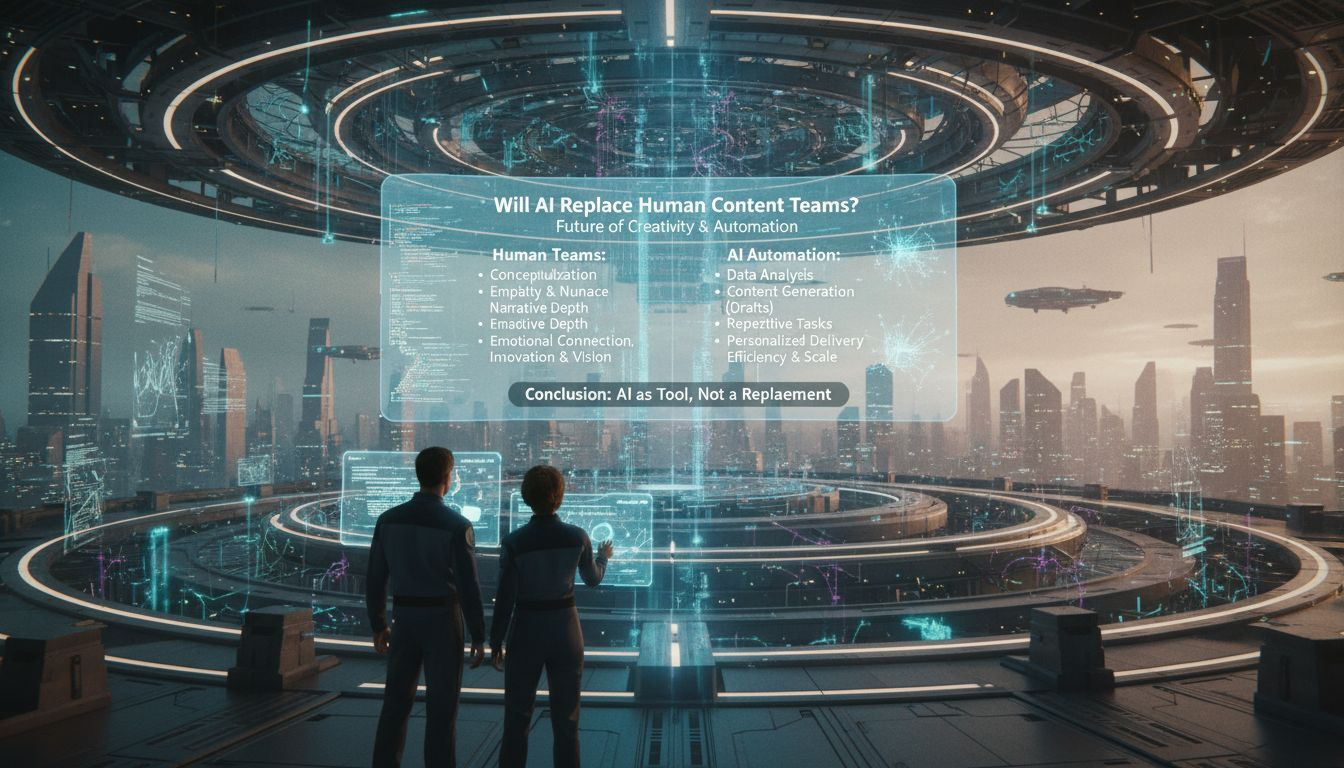
Will AI Replace Human Content Teams? Future of Creativity & Automation
Will AI Fully Replace Human Content Teams? Exploring the Future of Creativity and Automation in Content Creation
In the fast-evolving landscape of digital marketing, AI’s role in content creation has shifted from novelty to necessity. For years, marketers and content strategists debated whether AI could genuinely replace human teams, especially when it comes to crafting compelling, nuanced stories or engaging narratives. Today, the question is no longer just about possibility but about the extent and speed of this transformation. Will AI fully supplant human content teams, or will it serve as a powerful supplement? The answer lies in understanding both the capabilities and limitations of AI, along with the strategic opportunities it presents for content marketers.
AI’s rapid development over recent years, especially with the emergence of sophisticated content generators and SEO tools, has created a buzz. From automating routine blog posts to optimizing entire website pages, AI is proving its worth in many areas. But the core question remains: can AI truly replicate the creative instincts, emotional intelligence, and strategic thinking that human content teams bring to the table? The answer isn’t black and white. Instead, it’s a spectrum, with AI increasingly taking over repetitive tasks while humans focus on high-level strategy, storytelling, and nuanced engagement. This article explores the current state, future possibilities, and practical implications of AI in content creation, especially for marketers aiming to stay ahead of the curve.
Understanding AI’s Capabilities in Content Creation
Automation and Efficiency Gains
At its core, AI excels at automating repetitive, data-driven tasks. For instance, generating product descriptions, meta tags, or basic news summaries can be done in seconds, freeing up human teams for more strategic work. The rise of free AI content generators has made it accessible for small businesses and startups to produce SEO-optimized content without hefty budgets. These tools can analyze keyword trends, suggest relevant topics, and even produce first drafts that require minimal editing. This efficiency boost allows marketers to scale their content efforts rapidly, often with minimal resource investment.
Advanced Content Generation Tools
More advanced AI models, like GPT-based systems, can craft nuanced articles, social media posts, and even long-form content that reads quite naturally. These models are trained on vast datasets, enabling them to mimic human language patterns, idioms, and tone. For example, AI can now generate blog posts that include embedded keywords, structured headings, and call-to-actions—all in line with SEO best practices. As these tools improve, they are increasingly capable of producing content that is both relevant and engaging, which is critical for maintaining audience interest and boosting site traffic.
SEO Optimization and Content Strategy
AI’s role in SEO is particularly noteworthy. AI-powered tools can analyze competitors, identify keyword gaps, and suggest content improvements to boost rankings. They also assist in automating SEO optimization, ensuring every piece of content is tailored for maximum visibility. Companies like HitPublish.ai offer platforms where AI not only generates content but also optimizes it for SEO in real-time, reducing the need for manual intervention. For marketers, this means faster content deployment and improved organic reach, especially when combined with data-driven insights.
The Limitations of AI in Content Creation
Creativity and Emotional Intelligence
Despite impressive advances, AI still struggles with true creativity and emotional resonance. Human writers bring personal experiences, cultural context, and emotional intelligence to their work—elements that are challenging for machines to replicate. For example, crafting a heartfelt story or nuanced opinion piece often requires empathy and a deep understanding of human nature. AI can mimic tone and style, but it rarely captures the authenticity that makes content memorable and impactful. This gap is especially evident in brand storytelling, where emotional connection is key.
Nuanced Understanding and Context
Another significant limitation is AI’s contextual understanding. While AI can analyze data and generate relevant content, it often misses subtleties and implied meanings. For instance, responding to sensitive social issues or tailoring content to specific cultural nuances requires a level of comprehension that current AI models lack. Marketers must therefore remain vigilant, reviewing AI-produced content to ensure it aligns with brand voice and audience expectations.
Risk of Homogeneity and Plagiarism
AI’s tendency to generate content based on existing data can lead to homogenized outputs, reducing originality. Over-reliance on AI may result in content that feels repetitive or derivative, which can harm brand differentiation. Additionally, there’s a risk of unintentional plagiarism if AI tools inadvertently replicate existing phrasing or ideas. Human oversight remains essential to maintain authenticity and originality in content marketing efforts.
The Future of Human-AI Collaboration in Content Teams
Complementary Roles
The most realistic future involves a hybrid approach where AI handles routine and data-heavy tasks, while humans focus on strategy, storytelling, and creative innovation. For example, AI can generate initial drafts, which humans then refine for tone, emotional depth, and brand consistency. This collaboration not only increases productivity but also enhances content quality, as humans add the critical human touch that AI cannot replicate.
Upskilling and New Roles
As AI takes over more operational tasks, content teams will need to adapt by developing new skills. Understanding how to work alongside AI tools, interpret data insights, and oversee content quality will become vital. Marketers might find themselves more involved in overseeing AI-generated content, editing for nuance, and developing strategic themes that align with brand goals. This shift requires a mindset change but opens opportunities for more creative and impactful work.
Case Studies and Practical Examples
Take the example of a major e-commerce site that integrated AI-driven content creation for product descriptions. Initially, AI produced hundreds of descriptions in minutes, but human editors reviewed and personalized them for brand voice and cultural relevance. The result was a significant boost in search engine rankings and user engagement. Similarly, a digital marketing agency used AI to generate blog outlines, then assigned writers to craft compelling narratives. This approach accelerated content production and improved client satisfaction. These practical examples highlight the potential of human-AI synergy rather than outright replacement.
Strategic Implications for Marketers
Leveraging AI for SEO and Traffic Boosts
Marketers should view AI as a strategic tool to enhance SEO and site traffic. Automated content generation can fill gaps in content calendars, improve keyword targeting, and streamline optimization efforts. For instance, using AI tools to identify trending topics and generate relevant content can help brands stay ahead of competitors. Additionally, AI can help optimize existing content for SEO, ensuring that every page is performing at its best.
Maintaining Content Quality and Authenticity
While AI can produce volume, quality remains paramount. Human oversight ensures content resonates with audiences, maintains brand voice, and adheres to ethical standards. Authenticity in storytelling, especially in sensitive or complex topics, cannot be outsourced to AI alone. A balanced approach involves using AI for efficiency but relying on human judgment for authenticity and emotional impact.
Choosing the Right AI Tools
Not all AI tools are created equal. Marketers should evaluate options based on their specific needs—whether for SEO, content generation, or automation. Platforms like HitPublish.ai provide integrated solutions that combine AI content creation with optimization features, streamlining workflows. The key is selecting tools that are flexible, easy to integrate with existing systems, and capable of producing high-quality output with minimal manual input.
Conclusion: Embracing the Future of Content Creation
AI is undeniably transforming how content is created, optimized, and distributed. However, the idea that AI will fully replace human content teams in the near future remains unlikely. Instead, the future belongs to those who leverage AI as a powerful assistant—enhancing productivity, scalability, and SEO performance—while still relying on human ingenuity for creativity, emotional resonance, and strategic depth. Marketers who adopt this hybrid model will be better positioned to boost site traffic, improve engagement, and stay competitive in an increasingly crowded digital landscape.
As the landscape continues to evolve, it’s crucial to stay informed about new AI capabilities and refine workflows accordingly. Experimenting with AI-driven content tools, understanding their strengths and limitations, and investing in team training will be key strategies moving forward. The most successful content teams will be those that recognize AI not as a threat but as an opportunity to elevate their craft and achieve results faster and more effectively.
In the end, the question isn’t whether AI will replace human content teams but how marketers can harness AI to amplify their efforts. Embracing this change with a strategic mindset will unlock new levels of creativity and operational efficiency, ultimately leading to better content, higher rankings, and more engaged audiences.
“AI-powered content creation tools are revolutionizing the way marketers approach SEO and content strategy, offering unprecedented speed and scale—yet human touch remains irreplaceable for authenticity and emotional resonance.”