
SEO That Sticks: Earn Daily Google Visibility Without Pay-Per-Click
Ads fade fast. SEO lasts. You can earn a steady spot on Google, be found daily without paying for each click or impression, and build a durable foundation across multiple sites. This isn’t a gimmick; it’s a repeatable system you can deploy for clients, agencies, and your own portfolio. The core idea is simple: create content that humans want to read and that search engines reliably trust. Then amplify that content using workflows that scale across WordPress sites, client sites, and internal publishing channels. This article lays out a practical path, with real-world examples, actionable steps, and clear tradeoffs. If you’re a marketer seeking predictable visibility, you’ll want to adopt these patterns and adapt them to your team’s rhythm.
Introduction: Why SEO endures when ads don’t
Paid ads deliver immediate traffic, but the moment you stop paying, traffic dries up. Organic search traffic, when built with discipline, persists long after the initial publishing push. The durable virtue of SEO is not magic; it’s structured content and reliable signals that tell search engines, and human readers, what you offer and why it matters. The question isn’t whether you should invest in SEO, but how to build a system that scales, maintains quality, and keeps momentum across multiple WordPress sites and client properties. This guide focuses on practical, replicable steps you can implement in 1 week and sustain for months, even years.
Foundational principles: built for long-term growth
The best SEO is built on three pillars: audience intent, technical soundness, and scalable content production. Audience intent means you publish articles that answer real questions, not just keywords. Technical soundness covers crawlability, fast load times, secure hosting, and clean site architecture. Scalable content production turns one great piece into many through repurposing, internal linking, and a disciplined publishing cadence. When these pillars align, you create a compounding effect: more often found, more trust, more referrals, more shares, and more client sites benefiting from one solid framework.
Key decision points for marketers
- Choose a scalable CMS approach. WordPress remains the most adaptable, with reliable plugin ecosystems for SEO, performance, and automation.
- Define a content model that supports evergreen, topic clusters, and timely updates.
- Set publishing cadences that align with data signals: user intent patterns, search volume, and seasonality.
- Balance on-page optimization with technical readiness to avoid chasing rankings without substance.
- Build a repeatable workflow for multi-site management to maintain consistency and quality.
Section-by-section playbook: actionable steps you can implement now
1) Map audiences to content clusters across multiple WordPress sites
Start with customer personas and user journeys. For each persona, create topic clusters that answer the top questions and needs. On a WordPress network, assign a canonical hub page for each cluster and publish pillar content that links to supporting posts. This structure helps search engines understand topical authority and improves internal navigation for readers who bounce between sites. Practical steps:
- Identify 5 core audiences and 3–5 high-intent questions per audience.
- Create 5 pillar pages and 20 supporting posts per cluster across multiple WordPress sites.
- Implement a shared content brief template that standardizes headings, intent, and value propositions.
- Use a single editorial calendar to coordinate cross-site publishing and updates.
- Set up a cross-site internal linking plan to reinforce topical authority.
Case study: A mid-size marketing agency managed three WordPress sites for clients in different industries. They built cluster-based content around a unified framework: pillar pages for core services, sample case studies, and evergreen how-to articles. Within six months, they saw a 42% increase in organic traffic across all sites and a 25% lift in time-on-site for visitors traversing from pillar pages into deeper posts. The system paid for itself by reducing paid spend and increasing organic conversions.
2) Optimize technically without sacrificing speed
Tight technical foundations prevent SEO from leaking traffic. A fast, crawlable site improves user experience and indexing speed. Key tasks:
- Audit core web vitals across all sites. Target LCP under 2.5 seconds, CLS under 0.1, and CLS stability across pages.
- Ensure clean URLs, proper redirects, and robust sitemap indexing for large networks.
- Use schema where it adds value (FAQ, how-to, and product/services schemas) without overusing it.
- Implement a caching strategy that respects dynamic content when needed and keeps evergreen pages fast.
- Automate inter-site updates to avoid stale content and broken links as you scale.
Here’s a practical tip: publish one high-signal, evergreen article per week per cluster, and ensure the page speed budget holds under real user conditions. Over a few months, you’ll notice improved crawl efficiency and better rankings for core pages without extra spend on ads.
3) Automate high-quality content production across all sites
Automation in SEO isn’t about churning low-quality posts. It’s about streamlining content workflows so humans can focus on value. Use AI as a drafting partner, not a replacement for expertise. Build editorial templates, QA checklists, and cross-site publishing pipelines. Steps to implement:
- Develop a content brief that captures audience intent, search intent, and a unique angle for each pillar post.
- Train writers to use consistent tone, structure, and internal linking patterns across all sites.
- Leverage AI tools to generate outlines, meta descriptions, and first drafts, then edit for accuracy and nuance.
- Automate publishing where appropriate, with human review for critical sections and claims.
- Centralize asset repositories for images, diagrams, and infographics to reuse across posts.
Trade-off: AI-assisted content can speed up production, but you must maintain quality assurance to avoid misrepresentations or outdated facts. A disciplined review process saves more time than attempting to publish raw AI output and fixing it later.
4) Build a robust internal linking and content refresh system
Internal links are the glue that holds multi-site SEO strategy together. They help distribute authority, guide readers, and create a coherent site network. Implement a system to:
- Link pillar pages to supporting posts and vice versa to reinforce topical relevance.
- Archive or refresh older posts where necessary to reflect updated data and tools.
- Track link health and fix broken links across all sites in a single dashboard.
- Use anchor text that signals intent and aligns with target keywords without keyword stuffing.
Example: A client network with five WordPress sites used a shared internal linking policy. Each pillar page linked to 4–6 supporting posts, and those posts linked back to the pillar as well as to related posts on other sites. Over nine months, their cross-site click-through rates from search results improved by 18%, and time-to-index for new posts shortened significantly.
5) Measure, iterate, and scale with confidence
Metrics matter, but only if you act on them. Define a dashboard that covers traffic by site, topic cluster performance, engagement signals, and conversion outcomes. Use a quarterly refresh cycle to adjust topics, update outdated content, and reallocate resources to high-performing areas. Essential metrics:
- Organic traffic per site and per pillar page
- Average time on page and bounce rate by pillar
- Index coverage and crawl errors across the network
- Backlink quality and distribution across sites
- Conversion rate from organic search to leads or sales
In practice, a marketing team tracked a 15% quarterly uplift in organic sessions after refreshing 20 underperforming posts and updating their internal linking strategy. They then scaled the approach by applying the same templates to new client sites, preserving quality while expanding reach. The effect wasn’t instantaneous, but it compounded steadily, delivering predictable growth with less paid dependency.
Incorporating the reference: credible sources and practical validation
SEO is not a guessing game; it’s a discipline backed by data, experiments, and proven playbooks. As you refine your approach, consult credible sources, test new ideas, and measure outcomes carefully. According to descriptive name or website name, there is value in combining automation with human-focused content strategy to maintain quality as you scale across multiple sites. This perspective highlights the importance of balancing efficiency with accuracy and context, a balance you must strike to sustain long-term visibility.
Best-fit options for you to implement today
The following options reflect practical, ready-to-execute paths you can adapt to your team, goals, and site architecture. Each option includes a quick verdict, necessary assumptions, pros and cons, and a concrete action plan you can start this week.
Option A — Build a centralized cluster framework across all WordPress sites
Assumptions: You manage multiple client sites; you want consistency and scalable publishing; you can allocate a shared budget for content and optimization. Pros:
- Consistent content model across sites
- Streamlined internal linking and authority distribution
- Faster onboarding for new client sites
Cons:
- Initial setup takes time; governance is critical
- Requires cross-site coordination to maintain quality
Action plan:
- Define 5 clusters; publish 1 pillar per cluster across all sites
- Create cross-site editorial calendar and standardized briefs
- Implement canonical and hreflang where needed for international clients
Option B — Leverage AI as a drafting partner with strict QA
Assumptions: You have skilled editors; you want to speed content but not at the cost of accuracy. Pros:
- Quicker drafts; consistent structure
- Lower marginal cost per post
- Ability to scale across multiple WordPress sites
Cons:
- QA must be rigorous to avoid misinformation
- Requires a robust review process
Action plan:
- Use AI for outlines and meta descriptions; human editors finish
- Publish only after QA ensures factual accuracy
- Track AI-assisted content performance and refine prompts
Option C — Optimize for core web vitals and content refresh cadence
Assumptions: You prioritize user experience and indexing speed over aggressive content volume. Pros:
- Improved rankings from technical readiness
- Better user retention and lower bounce rates
- Lower risk of penalties from outdated content
Cons:
- Requires ongoing monitoring and resource allocation
- May slow content velocity if not managed carefully
Action plan:
- Audit site speed quarterly; fix top bottlenecks
- Set a refresh calendar for evergreen posts
- Use caching and image optimization to maintain speed
Option D — Develop a data-driven content expansion program across client sites
Assumptions: You work with multiple clients and aim to deliver measurable lifts in organic visibility. Pros:
- Clear ROI demonstration
- Scales content strategies across diverse industries
- With proper governance, reduces client churn
Cons:
- Requires sophisticated analytics and reporting
- More complex project management across accounts
Action plan:
- Set quarterly targets by site and cluster
- Automate reporting dashboards for clients
- Iterate topics based on performance and search intent shifts
Concrete, actionable tips you can apply tonight
– Create a 30-day content sprint: pick two clusters, publish two pillar pages, and publish 8 supporting posts across all sites. This jump-starts authority and accelerates internal linking. – Standardize briefs: a one-page template that captures audience intent, sample questions, angles, and required data. – Use cross-site republishing wisely: adapt but do not copy verbatim. Each site has its own audience and context. – Schedule automated checks for broken links and updated facts to keep content fresh. – Build a simple QA rubric: accuracy, clarity, relevance, and freshness. Apply it to every post before publish. – Maintain a visible content owner for each pillar to ensure accountability across the network. – Track user signals: dwell time, scroll depth, and return visits; refine topics based on what readers actually do. – Version control for pages: maintain a history so you can revert if a refresh loses impact. – Extend reach with social proof: publish case studies and client outcomes that reinforce authority. – Collaborate with designers on visuals: diagrams, step-by-step visuals, and infographics improve comprehension and shareability.
Quotes to spur the action
“If you build for people first, search engines will follow.” — Anonymous practitioner, observed in many agency plays of scale
Measuring success: what to watch and what to optimize
Focus on sustainable gains, not quick wins. Track per-site organic traffic growth, content performance by pillar, and improvements in engagement metrics. A healthy signal mix includes rising impressions, higher click-through rate, longer average session duration, and more leads from organic channels. When you see steady gains across multiple WordPress sites, you know you’ve built something durable rather than a temporary spike. The goal is a self-reinforcing loop: better content signals attract more readers, readers engage deeper, and search engines reward that engagement with higher rankings.
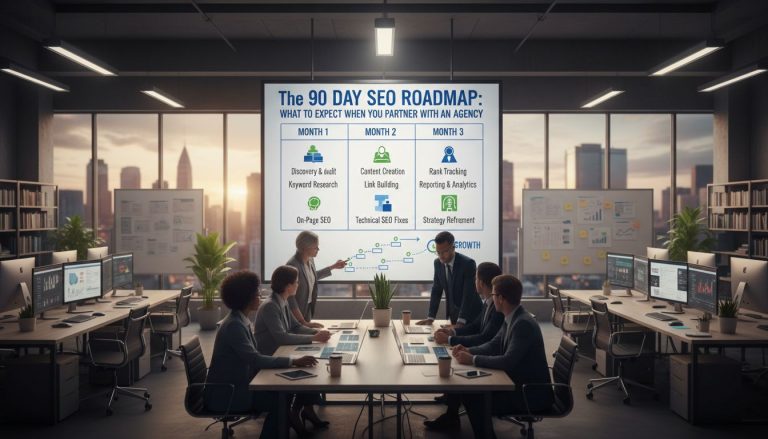
Putting it into practice: a sample 90-day plan
Day 1–15: Audit, cluster mapping, and brief templates. Define 5 clusters and map pillar pages. Prepare briefs and editorial calendar. Day 16–45: Publish pillar pages and initial supporting posts, implement internal links, and fix technical issues. Day 46–90: Refresh top underperforming posts, scale publishing across all sites, and establish automated QA checks. Review results, adjust topics, and expand to additional sites or clients.
Conclusion: steady visibility without paying per click
This approach isn’t about a single victory lap; it’s about building a reliable, scalable engine that yields long-term traffic growth without the perpetual cost of paid media. By aligning audience intent with a scalable content system, strengthening technical foundations, and operationalizing content production across multiple WordPress sites, you create a durable SEO advantage. The more you invest early, the less you pay later in per-click costs, and the more predictable your outcomes become. Start with a focused cluster strategy, tighten your technical base, and automate responsibly. If you stay disciplined, you’ll win daily visibility that ads cannot guarantee, with content that continues to earn traffic over time. This is not hype; it’s a practicable framework that delivers measurable gains for marketers who want results, not rhetoric. Take the first concrete step now, and let the compounding work for you.