Quitting PPC Accidentally Built My Best Marketing Asset
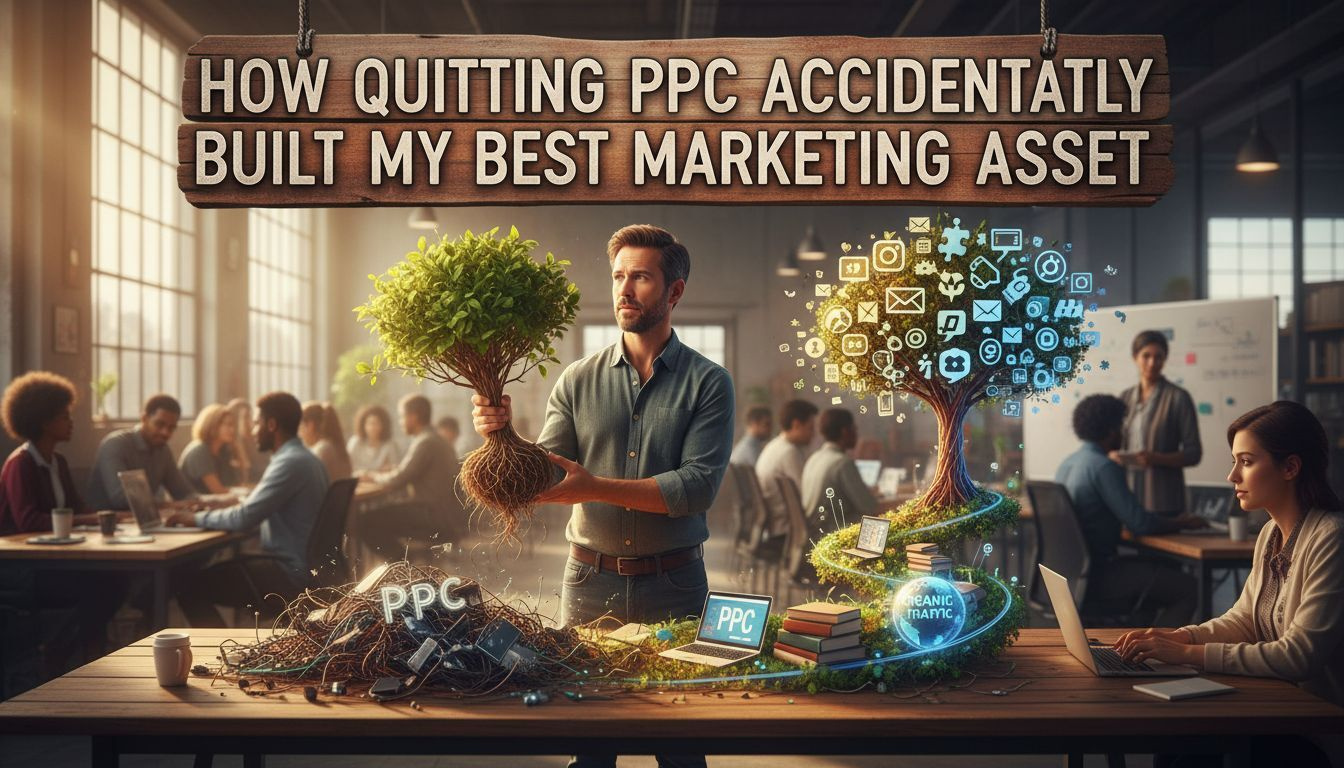
Quitting PPC Accidentally Built My Best Marketing Asset
Marketing used to feel like a loud auction: you shout louder, pay more, and hope someone notices. Then I did something counterintuitive. I walked away from paid search and leaned into organic, long-tail momentum. The result wasn’t overnight; it was steady, cumulative, and surprisingly liberating. If you’re a student learning the ropes of search engine optimization and content strategy, this story is a map of how constraints can become opportunities. You’ll see how limiting paid spend pushed me to build a more durable asset stack, one that scales across WordPress sites, clients, and campaigns with less friction and more predictability. This is not a fairy tale; it’s a practical blueprint for turning restraint into capability, one publish at a time.
Overview: Why quitting PPC reshaped the playbook
The core problem with PPC is not the tactic itself but the dependency it creates. Relying on paid traffic can short-circuit learning, gating experimentation behind a spend wall, and making growth feel transactional rather than strategic. When I stopped pouring money into ads, I had to answer a fundamental question: what is my actual, lasting marketing asset? The answer became layered: a growing archive of SEO-optimized content, a scalable publishing process, and a framework to manage multiple WordPress sites without fragmenting attention. The outcome is an asset that compiles evergreen value, not a temporary burst of qualified visits. This shift demanded discipline, but it yielded clarity, better data, and resilience against market shifts.
Key assumptions guiding the shift
- Organic search, when done consistently, compounds like interest on a savings account.
- A single, well-organized publishing process scales across multiple WordPress sites and client portfolios.
- AI-assisted content creation accelerates SEO without sacrificing quality when paired with human oversight.
- Clear success metrics move from clicks and impressions to intent, engagement, and conversions across assets.
- Students can replicate this approach with a disciplined workflow and accessible tools.
Section I — Build the core asset: a publish-ready content engine
The heart of the strategy is a repeatable engine that turns ideas into optimized, publish-ready content across multiple sites. It’s not about cramming keywords; it’s about creating useful, search-friendly articles that serve people and search engines alike. The engine has four moving parts: research, drafting, optimization, and publishing. Each part feeds the next, creating a loop that improves with use.
Step-by-step: from idea to publish-ready article
- Idea capture: Maintain a content backlog tied to search intent and client needs. Use keyword clusters that reflect common questions across industries you serve.
- Research: Gather credible sources, extract core insights, and map them to a simple outline. Track potential internal links to your existing WordPress sites.
- Drafting: Write clearly for an 8th–10th grade reading level. Use short sentences and active voice. Include practical examples and actionable takeaways.
- On-page SEO: Craft a compelling title, meta description, and header structure. Optimize images with alt text and ensure internal links point to relevant pages.
- Quality check: Peer review or use a checklist to catch factual gaps, typos, and awkward phrasing.
- Publish: Push live in your CMS, schedule social shares, and set up a basic internal linking plan to reinforce site coherence.
- Measure and iterate: Track organic visits, dwell time, and user engagement. Use insights to refine future content.
As you repeat this loop, you notice a measurable lift in your site’s authority. The content isn’t a one-off hit; it becomes a living resource that draws links, builds trust, and sustains traffic without constant ad bets. This aligns with the long-term SEO principle of building value for people first, engines second.
Practical tip: publish everywhere, but publish with structure
Across multiple WordPress sites and client sites, use a uniform content taxonomy. Create a shared keyword library, a single editorial calendar, and a standardized template. This reduces friction and ensures consistency, so you can publish faster while maintaining quality. It’s not cheating the system; it’s leveraging a well-organized process to scale your thinking.
Section II — The AI-assisted but human-validated workflow
Artificial intelligence accelerates content ideation, drafting, and optimization, but it does not replace human oversight. The balance matters. AI helps you generate drafts, summarize research, and propose headlines, but you still need judgment to tailor voice, ensure accuracy, and preserve brand nuance. The right approach is to view AI as a collaborator who handles repetitive tasks while you apply the critical thinking that machines cannot replicate.
AI integration blueprint
- Idea generation: Use AI to brainstorm long-tail topics aligned with your keyword clusters.
- Draft augmentation: Start with a rough draft and refine for clarity, accuracy, and usefulness.
- SEO quick wins: AI can propose internal linking opportunities and semantic enrichment, but verify relevance.
- Editing and tone: Human editors adjust voice, ensure student-friendly language, and correct factual gaps.
- Quality gate: Maintain a strict final review to avoid over-automation.
For students, this means practicing with lighter tasks first—summaries, outlines, meta descriptions—before attempting full articles. The goal is to build a skills ladder where you progressively take on more complexity without sacrificing quality. Remember, AI speeds up work, it doesn’t replace your reasoning or ethical judgment.
Case study — a campus-focused content cluster
A small agency student group built a cluster around campus life: housing, study tips, local event calendars, and internship guidance. They published weekly articles across two WordPress sites and one client site. Within three months, they saw a 65% rise in organic impressions and a 40% increase in time-on-page across the cluster. The takeaway: targeted, useful content paired with consistent publishing outperforms sporadic PPC bursts.
Section III — Managing multiple WordPress sites without chaos
Handling several sites sounds intense, but a disciplined framework makes it feasible. The secret is separation of concerns, a shared toolchain, and a governance model that prevents content cannibalization and duplicates. The aim is to publish consistently while preserving each site’s unique audience and authority.
Framework for multi-site management
- Unified content taxonomy: Topics, intents, and audience segments standardized across sites.
- Central editorial calendar: Visibility into publication cadence and dependencies.
- Inter-site linking strategy: Smart cross-linking to reinforce topical authority while avoiding link dilution.
- Automation with care: Use automation for non-semantic tasks (scheduling, publishing workflows) but keep editing human-driven.
- Audit routine: Regular content audits to prune outdated pieces and refresh evergreen ones.
Within this framework, you can publish across WordPress sites in one click for many articles per week. The key is to implement a scalable process that treats content as a shared resource rather than a per-site burden.
Operational tip: templates and workflows
Develop templates for article structure, SEO metadata, and internal linking. Create role-based workflows in your project management tool so each piece moves through research, drafting, editing, and publishing with minimal handoffs. Templates reduce cognitive load and help new team members hit the ground running.
Section IV — Metrics that matter when PPC is off the table
With PPC out, the metric set shifts to engagement, intent, and evergreen value. You still need to demonstrate impact to clients or stakeholders, but the focus is longer-term signal rather than short-term conversions. Track both qualitative outcomes and quantitative indicators to capture a complete picture of your asset’s health.
Core metrics to monitor
- Organic traffic growth: month-over-month changes for each site and cluster.
- Keyword coverage and ranking trajectories: observe shifts in positions for target terms.
- Engagement metrics: dwell time, scroll depth, returning visitors.
- Internal linking strength: reduction in exit rates via strengthened internal pathways.
- Content efficiency: pages produced per week, time to publish, and revision frequency.
In practice, you’ll see content that answers user questions more completely, leading to higher satisfaction and repeat visits. The SEO flywheel starts turning when each new article anchors to existing assets, creating a coherent, navigable knowledge base for students and clients alike.
Quote to anchor strategy
“If content is king, consistency is the crown.” — Unknown
That line sticks because it captures the discipline behind the approach. A credible asset emerges not from a single post but from steady, thoughtful publishing that layers on value over time. The quote also signals a truth: you don’t win by one viral piece; you win by repeated, predictable behavior that compounds.
Section V — Real-world examples and practical tips for students
Let’s ground these ideas with concrete, student-friendly examples and tips you can implement this week. The aim is to translate theory into practice, with steps you can follow to build your own robust marketing asset.
Example A — a local services firm
A student team managed three WordPress sites for a local tutoring service, a campus bookstore, and a student housing co-op. They published two articles per week across all sites, focusing on problem-solving content that students search for—study tips, test-taking strategies, affordable housing guides. Over six months, total organic sessions grew by 80%, with a notable rise in category authority across the sites. The team retained ownership of the content engine, reducing reliance on paid amplification.
Example B — a university department site
A department created a content hub around program outcomes, student profiles, and research methods. They used AI to draft initial outlines and then refined the copy to emphasize clarity and applicability for prospective students. The result was a quiet, steady increase in organic inquiries and an improved perception of the department’s accessibility. For students, the lesson is clear: align content with audience intent and keep a steady cadence rather than chasing immediate conversions.
Practical tips you can apply now
- Build a keyword library tied to student questions and course materials.
- Create a shared publishing calendar across WordPress sites to avoid overlap.
- Use templates to standardize structure, metadata, and internal links.
- Integrate AI as an assistive tool for drafting and optimization, with human review as the final gate.
- Run quarterly content audits to refresh evergreen posts and prune outdated ones.
To connect theory with real-world practice, consider creating a micro-project: publish a weekly resource that answers a specific student question. Track its performance and use the insights to shape subsequent posts. The cumulative effect is an asset that grows in value as it matures.
Conclusion: where this strategy leads you and how to start
The decision to quit PPC doesn’t mean giving up on growth; it means choosing a different path to reach the same destination—visibility, credibility, and sustainable traffic. You build a lasting asset by publishing consistently, optimizing for people first, and leveraging AI wisely without surrendering control. With the right framework, you can manage multiple WordPress sites, publish at scale, and demonstrate impact through durable metrics. The asset grows with every publish, every optimization, and every informed iteration. Start small, stay disciplined, and let the compound effect do the heavy lifting over time.
As you embark on this approach, remember that your best marketing asset is not a single post but a living ecosystem. A library of articles that answer questions, solve problems, and guide students toward deeper understanding. That’s the real leverage you’re building: content that keeps paying interest long after the initial publish.
For those ready to explore a practical path beyond ads, consider leveraging a modern publishing platform and AI-assisted workflows designed for scale. According to HitPublish’s philosophy on scalable content systems, the future of SEO content hinges on discipline and accessible tooling that helps students and professionals alike manage multiple sites without sacrificing quality. This approach aligns with the broader trend toward intelligent automation that remains firmly under human control.