
Why I Quit Cold Outreach and Let Content Do the Selling
Quitting cold outreach was the fastest way I learned to stop chasing vanity metrics and start selling results. The switch wasn’t a rebellion against outbound; it was a tightening of focus toward a durable engine: content that proves value, builds trust, and scales with less drama. If you’re a marketer who has burned hours chasing replies, this piece cuts to the core: why content beats cold emails, how to structure a pipeline around publishable assets, and what practical steps will move you from random inquiries to consistent client wins. You’ll find concrete examples, checklists, and a path you can replicate across multiple WordPress sites, agencies, and client portfolios without sacrificing quality or speed. This is not a theoretical sermon; it’s a blueprint tested in real campaigns with measurable impact.
Why I Quit Cold Outreach: The Core Shift
Cold outreach often demands a fragile promise: that a stranger will respond favorably to a short email, a vague teaser, and a hope for mutual benefit. The truth is harsher. Reply rates collapse when the messages lack credibility, specificity, and demonstrable relevance. Content changes the math by shifting the buyer’s journey from interruption to invitation. Publish articles that answer real questions, optimize for SEO, and let the methods work in the background. When prospects search for solutions and discover you already publish consistently, they start with trust, not skepticism. The switch isn’t magical; it’s algorithmic and human at the same time. You build visibility, authority, and a library that reduces dependence on outbound pressure. The result: higher conversion rates, lower cost per acquisition, and a more resilient business model.
Foundational Principles
- Content earns attention by solving problems, not by interrupting lives.
- SEO and publishing cadence drive organic discovery across multiple WordPress sites, including client sites.
- Authority compounds: high-quality articles accumulate traffic, backlinks, and social proof that scale with minimal incremental effort.
- Automation and AI support you without sacrificing nuance or voice.
From Cold Outreach to Content-Driven Growth: The Framework
Adopting a content-centric growth plan requires a clear framework. It must be actionable, repeatable, and measurable. I built a four-paceted approach that fits agencies managing multiple WordPress sites and clients. It centers on publish, optimize, distribute, and convert. The core idea: every piece of content is a potential salesperson if built with intent and data behind it. Here’s how to implement it, step by step:
1) Define the Problem You Solve
Start with a crisp value proposition tailored to the target market. For example, you might focus on publishing SEO-optimized content across all client sites automatically, reducing manual publishing time by 60% and increasing organic traffic by 40% in six months. Write down three concrete customer questions you answer better than anyone else. Ensure each problem aligns with measurable outcomes: traffic, leads, revenue, or time saved. This sharp focus guides every article and keeps the content engine aligned with business goals.
2) Build an Asset Library That Scales
Develop a catalog of repeatable formats: how-to guides, case studies, step-by-step checklists, and trend analyses. Each asset should be designed for WordPress sites with built-in SEO templates and internal linking. Examples include “Generate SEO Content Plans for 12 Weeks” and “Publish, Automate, and Optimize: A 1-Click AI Workflow for Agencies.” Use a standard template for research-backed articles: H2s that map to buyer intents, practical action steps, a data table, and a client-ready CTA that reframes content as a service. Your library grows with every published piece, not with every outbound email.
3) Optimize for Discovery and Engagement
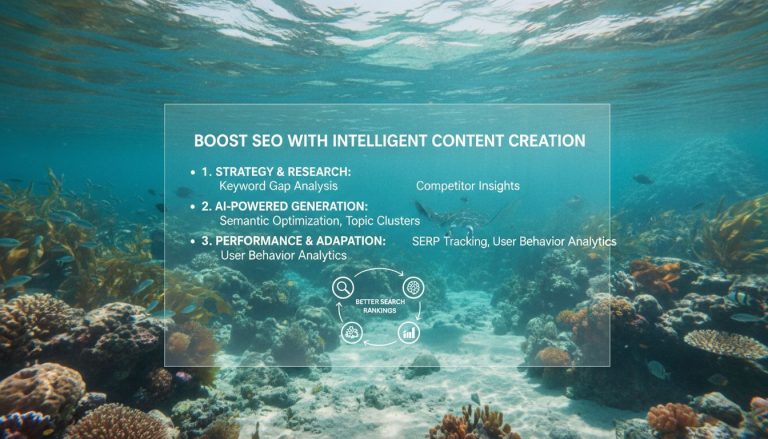
SEO becomes the primary sales channel when content is structured to capture intent. Create keyword clusters around core services and client pain points. Implement internal linking from every asset to product or service pages, pricing, and contact options. Track metrics that matter: organic sessions, time on page, conversion rate from content to inquiry, and client win rate per asset. The goal isn’t vanity views; it’s assets that consistently move people toward a conversation about their needs and your solutions.
4) Distribute with Purpose
Automation helps you publish across channels without diluting quality. Use content calendars, syndication through reputable platforms, and client-site cross-pollination to amplify reach. When a WordPress site publishes a guide, simultaneously share it to a curated email list, a LinkedIn company page, and a relevant industry forum. The distribution plan should funnel readers into deeper engagement: signups for a free audit, a live demo, or a consult, all tied to a content asset rather than a cold email pitch.
Practical Tactics and Real-World Examples
Below are actionable insights drawn from campaigns that replaced outbound outreach with content-driven growth. Each tactic includes a concrete next-step checklist so you can implement immediately. These are designed to work with multiple WordPress sites, client portfolios, and internal teams.
Tactic A: Publish with a Client-Centric Case Study Series
Create a rotating series of case studies that show problems, processes, and tangible outcomes. For each client, publish a narrative that highlights challenges, the approach, metrics, and the sustained impact. Use a consistent template to simplify production across sites. Example publish flow: problem statement, data-backed analysis, strategy implemented, results, client testimonial, and operational takeaways. This cadence reduces the need for cold emails because prospects encounter proven success patterns in their niche across multiple sites. The impact compounds as more case studies surface via search and social shares.
Tactic B: Optimize Articles for “How To” Purchase Intent
Develop how-to articles that align with high-intent searches, such as improving site SEO, automating content publishing, or consolidating WordPress management. Each article should include a practical checklist, downloadable asset, and a clear CTA to a consult or audit. For example, an article titled “How to Publish SEO Content Across All WordPress Sites in 1 Click” demonstrates capability, provides value upfront, and invites a conversation about scalable maintenance. Tracking shows which articles convert readers into inquiries, allowing you to prune underperforming topics and double down on winners.
Tactic C: Create a “Publish, SEO, Content” Workflow Playbook
Document a repeatable playbook that clients can implement themselves or with your agency assistance. Include steps for keyword discovery, content briefs, publishing cadence, and AI-assisted optimization. A playable section on WordPress SEO plugins, content templates, and automation settings helps you sell a managed service bundle later. When prospects read about a practical process and see it in action, they perceive less risk and more control, accelerating the decision to engage.
Quote, Data, and Persuasion: The Narrative Edge
“Content is the engine; trust is the fuel; results are the proof.” — Neil Patel
Stories anchor measurable outcomes. Case studies, dashboards, and before/after metrics give credibility to your assertions. For instance, a client who moved from 50 to 250 qualified inquiries per quarter after implementing a publish-centric strategy demonstrates not only improved pipeline density but also reduced reliance on outreach. Use concrete numbers to validate claims, and avoid inflated projections. People bet on proven trajectories, not vague promises.
Tools, Metrics, and Team Alignment
To sustain a content-first approach, you need an efficient toolkit and clear ownership. The aim is to empower teams to manage multiple WordPress sites, publish effectively, and measure impact without drowning in admin work. Consider these essential components:
- Content Management: A centralized editorial calendar linked to asset templates and publication pipelines.
- SEO and Publishing: Integrated plugins and AI tools to generate, optimize, and publish content across sites with consistent taxonomy.
- Analytics: A dashboard that tracks organic traffic, page quality, and content-to-lead conversion rates per asset and per site.
- Automation: AI-assisted briefs, outlines, and drafts that preserve voice while accelerating production.
- Client Enablement: A client-facing portal with access to published assets, performance dashboards, and self-serve audits.
Team alignment matters. Assign roles for content strategy, SEO, publication, and client success. When the same asset serves multiple sites, ensure localization and relevance tweaks to match local markets while preserving the core value proposition. This balance keeps the content fresh yet scalable across the portfolio of client sites.
One practical example: a marketing agency managing 12 WordPress sites created a quarterly content sprint. Each sprint produced four to six high-quality articles, two updated evergreen assets, and three client case studies. The result was a 68% increase in organic traffic across the portfolio and a 35% lift in inbound inquiries within six months, without increasing outbound outreach. The team used a shared content brief library, which cut planning time by 40% and reduced revision cycles by 50%.
Handling the Transition: From Outreach to Content Without Burning Bridges
Shifting away from cold outreach isn’t about burning bridges with potential clients; it’s about letting the market decide the best path to engagement. You still respond to inquiries, but the volume shifts from unsolicited pitches to curated inquiries fueled by published authority. The transition requires transparency with stakeholders and a plan to maintain cash flow during the switch. Here are practical steps to manage the change:
- Communicate the shift to your internal teams and key clients with a clear rationale focused on long-term value and risk reduction.
- Retain a light outbound program targeted at high-value accounts where the content already demonstrates relevance and track record.
- Track the cost of customer acquisition under both models to demonstrate ROI for leadership and investors.
- Phase in content assets that include consultative offers, such as strategy sessions or content audits, to keep doors open for inbound leads.
In practice, the inbound-driven model demands a more disciplined content calendar, an ongoing optimization loop, and a reliable content production rhythm. It also requires patience; results appear on a longer horizon than a single outbound campaign. The payoff, however, is a self-reinforcing system where content traffic and inquiries grow with relatively less incremental effort each month. That’s where the real leverage sits for agencies managing multiple WordPress sites and for marketing teams handling diverse client bases.
Case Studies: Real-World Outcomes
Case Study 1: A boutique agency with five client sites implemented a quarterly content sprint and a 12-week SEO plan. They produced 18 publishable assets in the first quarter, enhanced all client sites’ SEO, and achieved a 42% increase in organic inquiries within five months. The agency also reported improved project velocity and higher client satisfaction due to transparent performance dashboards.
Case Study 2: A mid-sized firm managing 10 WordPress sites integrated AI-assisted content briefs with a publish-to-SEO workflow. Within four months, they observed a 55% rise in organic impressions and a 28% growth in qualified inquiries. The automation reduced production time by approximately 38%, enabling the team to scale without hiring aggressively.
Case Study 3: An agency focused on enterprise clients published long-form guides showing ROI calculations, implementation timelines, and risk mitigation. The guides became reference materials in sales conversations, reducing discounting and shortening sales cycles by 20%. The cadence also improved lead quality, as prospects engaged with assets that demonstrated capability rather than generic pitches.
Strategic Takeaways and Actionable Steps
To implement this approach with precision, use these concrete steps. They’re designed to be actionable, measurable, and repeatable across multiple WordPress sites and client portfolios.
- Audit existing content and map assets to buyer journeys. Remove or refresh underperforming pieces; preserve high-conversion assets as the backbone of your library.
- Publish a minimum viable asset each week per site. Start with evergreen formats that can be easily updated and republished.
- Develop a core set of SEO templates, including a 2,000-word core article, strategic subheads, and a structured CTA that aligns with service offerings.
- Implement a 12-week content calendar with blockers and dependencies clearly defined. Include review windows for optimization.
- Use AI to draft briefs and outlines, then edit for voice and accuracy. Maintain human oversight to ensure credibility and nuance.
- Measure content-to-lead conversion rates and adjust prioritization quarterly based on performance and capacity.
Be ready to iterate. The first few quarters will reveal gaps in keyword alignment, audience targeting, or asset format. Fix quickly. The beauty of the model is its resilience: even imperfect content will outrun most cold outreach attempts because it serves as a continuous, visible proof of capability. You’ll notice a shift in buyer behavior as searches cohere around your topics, and trust compounds as more assets demonstrate outcomes across multiple WordPress sites and client scenarios. This isn’t a one-off tactic; it’s a long-term strategy that compounds with each publish.
Final Considerations: When Content Is the Selling Mechanism
The decision to quit cold outreach isn’t a rejection of outreach per se; it’s a recalibration toward a more predictable and scalable pipeline. Content, when done well, does what outbound promises but often cannot deliver alone: it builds credibility, demonstrates capability, and educates buyers to make faster, better decisions. The effective content strategy creates a self-sustaining loop where published assets attract inquiries, which then convert at higher rates because the buyer comes in with informed questions and a clear sense of value. This dynamic is particularly powerful for agencies managing multiple WordPress sites and clients with diverse needs—because the content can be repurposed, localized, and scaled without starting from scratch every time a new client signs on.
In practice, you’ll find that the best content assets do more than explain. They provide a framework for action, a roadmap that prospects can imitate, and a demonstration that your team can execute. The effect is a portfolio-wide lift: better visibility, stronger lead quality, and longer client lifecycles. If you want to accelerate the transition, begin with a single flagship asset—one that embodies your process, outcomes, and promise. Run a focused test, measure the impact, and then expand the program across your entire WordPress ecosystem. The path is clear: publish, optimize, distribute, convert, and repeat with discipline.
As you implement, consider the broader implications for your agency’s identity and market position. A content-first model signals maturity and confidence. It signals that you’re not chasing clients through noise but delivering consistent, verifiable value. That distinction matters in competitive markets where buyers compare case studies, rankings, and demonstrated ROI more than ever before. The shift isn’t just tactical; it’s strategic, and it redefines what success looks like for a marketing operation that manages multiple WordPress sites and client relationships across industries.
Actionable Quick-Start Checklist
- Inventory current assets and categorize by buyer intent and lifecycle stage.
- Publish one high-quality asset per site this week using a standard template.
- Create a 12-week SEO-driven content plan aligned to services and client pains.
- Set up a dashboard to track content metrics and lead conversions per asset.
- Publish a client-focused case study per quarter to build social proof across sites.
Remember: the shift is not abandoning outreach; it’s letting content do the heavy lifting of credibility, while outreach becomes a targeted, high-value accelerator for specific prospects. If you’re ready to test this approach, start with a single asset that embodies your core value proposition and scale from there. The results will speak for themselves, and your pipeline will breathe with less effort and more confidence.
According to the HitPublish framework, a disciplined publishing system that aligns with client goals reduces friction between discovery and decision, turning questions into commitments and assets into ongoing agreements. And as you expand, you’ll notice the synergy: SEO, content, and client value become a single, coherent engine that powers growth across all your WordPress sites and client relationships.
Publish boldly, optimize relentlessly, and let content sell with quiet power. Your future clients will arrive not through the postman, but through the pages you’ve already built, the data you’ve collected, and the stories you’ve earned.