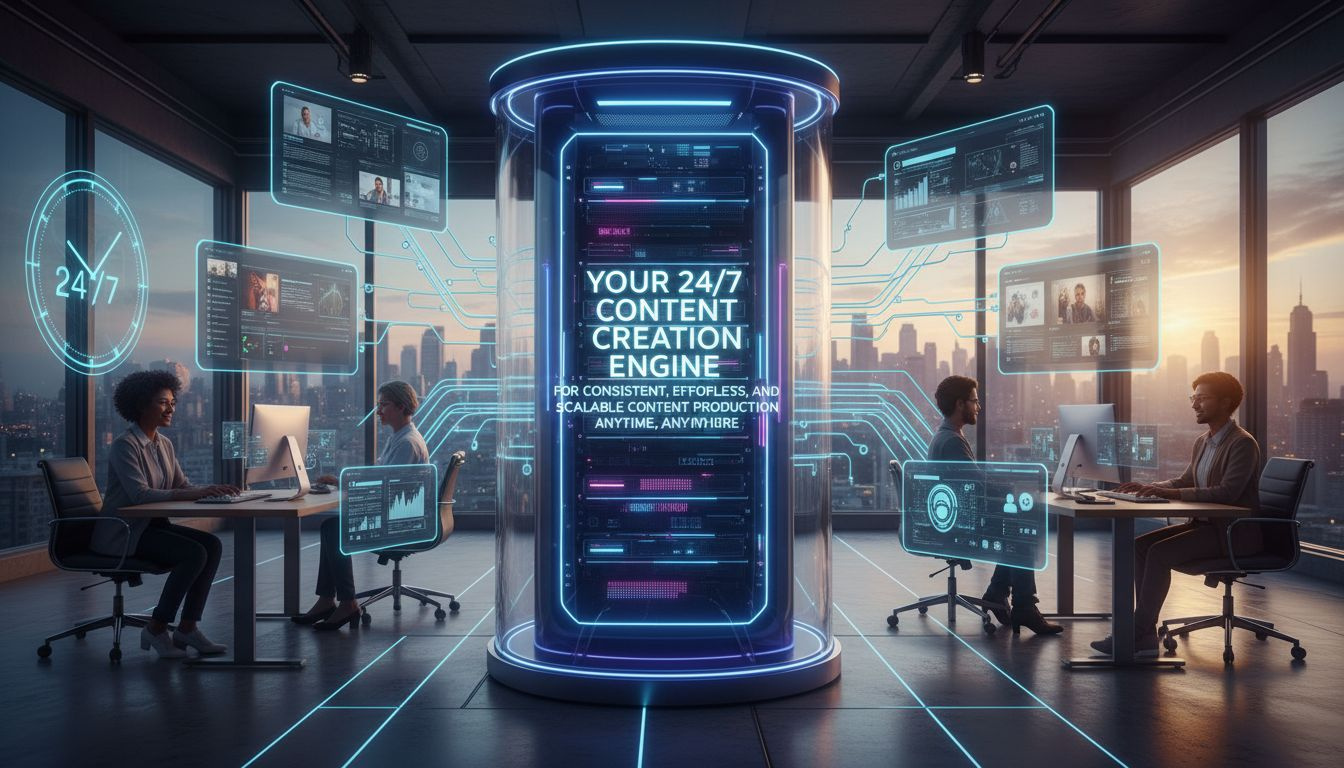
Your 24/7 Content Creation Engine for Effortless, Scalable Output
In today’s fast-paced digital landscape, content is king — but consistently producing high-quality, SEO-optimized content can feel like chasing a moving target. Marketers, entrepreneurs, and content creators alike grapple with the challenge of maintaining a steady stream of engaging material without burning out or sacrificing quality. This is where the concept of a 24/7 content creation engine becomes not just a luxury but a necessity. Imagine a system that works around the clock, effortlessly generating content tailored to your niche, boosting your site’s traffic, and freeing up your time for strategic growth. That’s the promise of leveraging AI-powered content generation tools, which have evolved from experimental novelties into indispensable assets for scalable content marketing.
Most traditional content creation methods rely heavily on manual effort—brainstorming ideas, researching keywords, drafting, editing, and optimizing. It’s a process that’s often time-consuming and resource-intensive, especially when aiming for consistency across multiple platforms and channels. But the advent of AI in content creation has disrupted this model profoundly. Today’s AI tools can analyze your target audience, generate SEO-friendly articles, optimize existing content, and even suggest new topics based on trending keywords—all in a fraction of the time it takes humans. The key is understanding how to harness these tools effectively, turning them into a reliable, scalable engine that fuels your content marketing efforts 24/7.
Why a 24/7 Content Creation System Matters
In the age of instant gratification, audiences expect fresh, relevant content at all times. If your competitors are churning out articles, social media posts, or product descriptions continuously, falling behind can be disastrous. A 24/7 content creation engine ensures your site remains active and authoritative—crucial factors for SEO rankings and user engagement. Moreover, it allows marketers to focus on higher-level strategy rather than getting bogged down in repetitive writing tasks. This shift from manual to automated content production doesn’t mean sacrificing quality; rather, it means optimizing your workflow with intelligent tools that can generate high-quality drafts, suggest improvements, and adapt content for different platforms seamlessly.
Practical Benefits of a Continuous Content Flow
- Consistent SEO Optimization: Regularly updated, keyword-rich content keeps your site relevant in search engines. AI content generators can analyze trending keywords and incorporate them naturally, enhancing your SEO efforts without manual research.
- Scalability: As your business grows, so does your content demand. Automated systems scale effortlessly, producing more content without proportional increases in manpower or costs.
- Time and Cost Efficiency: Automating content creation reduces the need for large editorial teams, saving money and freeing up valuable resources for strategic initiatives.
- Multi-Channel Adaptability: Whether it’s blog posts, social media updates, email newsletters, or product descriptions, AI tools can tailor content for each platform, ensuring consistency and relevance across channels.
How AI Transforms Content Creation for Marketers
AI-driven content tools have matured significantly, becoming more than just simple text generators. They now incorporate advanced language models, machine learning algorithms, and natural language processing (NLP) to produce human-like, engaging content. These tools can understand context, adapt tone, and even suggest images or multimedia elements to complement written material. This transformation means marketers no longer need to spend hours drafting and editing; instead, they can input basic prompts and receive ready-to-publish content that’s optimized for SEO and audience engagement.
For example, a small business looking to boost its online presence can use an AI content generator to produce weekly blog posts targeting specific keywords. Over time, this consistent publishing schedule improves search engine rankings and attracts more visitors. Additionally, AI tools can analyze existing content, identify gaps, and generate new ideas aligned with current trends. This proactive approach ensures your content remains fresh and competitive, even when your team is busy with other priorities. According to a leading AI content platform, integrating AI into your content workflow can increase output by up to 300%, all while maintaining quality and relevance.
Case Study: E-Commerce Site Boosts Traffic with AI
An online retailer faced the challenge of maintaining fresh product descriptions and blog content across hundreds of items. Manual updates were slow, and SEO suffered as a result. By adopting an AI content generator, they automated product descriptions and created weekly blog posts targeting long-tail keywords. Within three months, their organic traffic increased by 50%, and sales conversions improved significantly. The AI tools allowed them to generate content at scale, optimize for SEO automatically, and adapt quickly to market trends. This example illustrates how a well-implemented AI content engine can transform a static site into a dynamic, traffic-driving machine.
Implementing an AI Content Creation System
Step 1: Define Your Content Strategy
Before diving into AI tools, clarify your goals. Are you aiming to increase brand awareness, generate leads, or improve SEO rankings? Knowing your objectives helps determine the type of content to produce, the tone, and the platforms to target. Establish clear KPIs such as traffic growth, engagement rates, or conversion metrics. A solid strategy acts as a roadmap, guiding your AI-powered content efforts and ensuring alignment with your overall marketing goals.
Step 2: Choose the Right AI Tools
Not all AI content generators are created equal. Some excel at long-form articles, others at social media posts or product descriptions. When selecting tools, consider factors like SEO optimization features, ease of integration with your CMS (especially WordPress), customization options, and content quality. Popular options include Jasper, Copy.ai, and the aforementioned Hit Publish. These platforms offer templates, keyword integration, and automation capabilities that streamline the entire process.
Step 3: Automate and Optimize Workflow
Once you select your tools, set up automation workflows. For example, schedule AI-generated blog posts to publish at optimal times or automate social media snippets from longer articles. Regularly review and refine content based on analytics. Use AI to suggest improvements, update outdated material, or expand on high-performing topics. Remember, automation is not a set-it-and-forget-it approach; ongoing monitoring and fine-tuning are essential to maintain quality and relevance.
Maximizing SEO with AI-Generated Content
SEO remains at the heart of digital marketing. AI tools are particularly effective at generating SEO-optimized content because they analyze vast datasets of search queries and trending keywords. They can craft articles that naturally incorporate target keywords, create compelling meta descriptions, and suggest internal linking strategies. For instance, integrating AI-generated content with your WordPress site can automate SEO tasks, significantly boosting your search engine rankings.
However, it’s important to maintain a human touch. AI can handle the heavy lifting, but human oversight ensures the content aligns with brand voice and provides genuine value. Combining AI efficiency with human insight creates a powerful synergy that elevates your content marketing efforts. As detailed in an industry-leading AI platform, leveraging AI for SEO can lead to sustained traffic growth and improved conversion rates over time.
Actionable Tips for SEO Optimization
- Use AI to generate keyword-rich titles and headings.
- Incorporate LSI (Latent Semantic Indexing) keywords suggested by AI tools to enhance relevance.
- Regularly update old content with new keywords and insights generated by AI.
- Automate meta descriptions and alt text for images to improve on-page SEO.
- Monitor your analytics and let AI suggest content adjustments based on performance data.
Overcoming Challenges and Ensuring Quality
While AI has revolutionized content creation, it’s not without pitfalls. Relying solely on automated content can lead to generic, unengaging material if not properly managed. Quality control remains paramount. Implement editorial reviews to catch errors, ensure factual accuracy, and preserve your brand voice. Also, be cautious about over-optimization, which can harm your SEO efforts and alienate readers.
Another challenge is avoiding duplicate content issues. AI tools may inadvertently produce similar content, so it’s crucial to customize outputs and add unique insights. Regularly training your AI models with your specific niche data can improve relevance and originality. Remember, AI is a tool—an intelligent assistant that amplifies human creativity, not a complete replacement. Combining AI efficiency with human oversight yields the best results, especially in highly competitive niches where nuance matters.
Future Trends in AI Content Generation
The landscape is evolving rapidly. Future AI tools will likely become even more sophisticated, capable of creating multimedia-rich content, personalized experiences, and real-time updates. Natural language understanding will improve, making AI-generated content indistinguishable from human work. Marketers who stay ahead by integrating these innovations will enjoy a significant competitive advantage. It’s wise to keep an eye on emerging tools and continually adapt your strategy to leverage the latest capabilities.
Final Thoughts: Building a Resilient Content Engine
Building a 24/7 content creation engine requires more than just plugging in AI tools. It demands strategic planning, continuous optimization, and a clear understanding of your audience’s needs. When executed correctly, it can transform your content marketing from a reactive chore into a proactive, scalable powerhouse. This approach not only boosts your site’s traffic and SEO rankings but also enhances your brand authority and customer engagement.
By automating routine tasks and focusing your human resources on creative and strategic endeavors, you can achieve a sustainable content pipeline that adapts to changing trends and audience preferences. The key is to view AI as an enabler—an intelligent partner that helps you produce more, better, and faster. As the digital space becomes increasingly crowded, adopting such innovative tools is no longer optional but essential for staying competitive.
Remember, the core of effective content marketing is authenticity and value. Use AI to handle the heavy lifting, but infuse your unique voice and insights into every piece. This blend of automation and human touch will ensure your content remains engaging, relevant, and SEO-optimized. Embracing this technology today sets the stage for exponential growth tomorrow.
In essence, establishing a reliable, scalable content engine powered by AI tools is a game-changer. It’s about working smarter, not harder, and ensuring your site remains a vibrant hub of fresh, optimized content at all hours. With the right strategy, continuous refinement, and a touch of human creativity, your content marketing efforts can reach new heights, driving sustained traffic and conversions. The future of content creation is here, and it’s powered by AI.